
By Jon Merwin, Founder and CEO, Licensed Insurance Advisor
Short answer: Replacement cost pays what it costs to repair or replace damaged property with similar materials today. Actual cash value pays replacement cost minus depreciation, so older property gets less. Two policies with the same dwelling limit can pay very different amounts after the same claim depending on which one you have.
Portsmouth Atlantic Insurance is a family-owned independent agency that compares 40+ carriers. Much of New England’s housing is old, with slate roofs, plaster walls and hand-built trim, so how a policy settles a claim matters more here than in most places.
Replacement cost vs. actual cash value at a glance
| Replacement cost (RC) | Actual cash value (ACV) | |
|---|---|---|
| What it pays | The cost to repair or replace with like kind and quality, at today’s prices | Replacement cost minus depreciation for age and wear |
| A 15-year-old roof damaged in a storm | Close to the cost of the repair or a comparable new roof, less the deductible | The depreciated value of the old roof, less the deductible |
| Belongings | The price of a comparable new item | What the used item was worth |
| How payment often works | Many policies pay ACV first, then the rest once repairs are complete | One payment based on depreciated value |
| Insurance-to-value requirement | Many policies require a limit of at least 80% of replacement cost for full payment on partial losses | Usually no such requirement |
| Relative cost | Usually costs more | Usually costs less |
| Where you often see it | Most homeowners (HO-3) dwelling coverage; DP-3 landlord buildings | Some contents coverage, DP-1 policies, and roof settlement terms on older roofs |
Settlement terms differ by carrier and endorsement. Your declarations page and policy form decide how a claim is paid.
Three things that change the math
Your dwelling limit
Replacement cost coverage only pays up to your dwelling limit. If the limit hasn’t kept up with construction costs or your renovations, you can come up short even with an RC policy. Some carriers offer extended replacement cost, which adds a cushion above the limit. Our dwelling coverage guide walks through setting the number.
Roof settlement
Roofs take a beating from New England ice dams, nor’easters and coastal wind. Some carriers settle older roofs at actual cash value or on a payment schedule tied to roof age, even when the rest of the house is replacement cost. Read more: will insurance cover a 20-year-old roof?
Building code upgrades
After a large loss, a rebuilt home may have to meet current code for wiring, egress, energy and structure. Replacement cost doesn’t pay for those upgrades on its own. Ordinance or law coverage does, up to its limit.
Older and historic homes
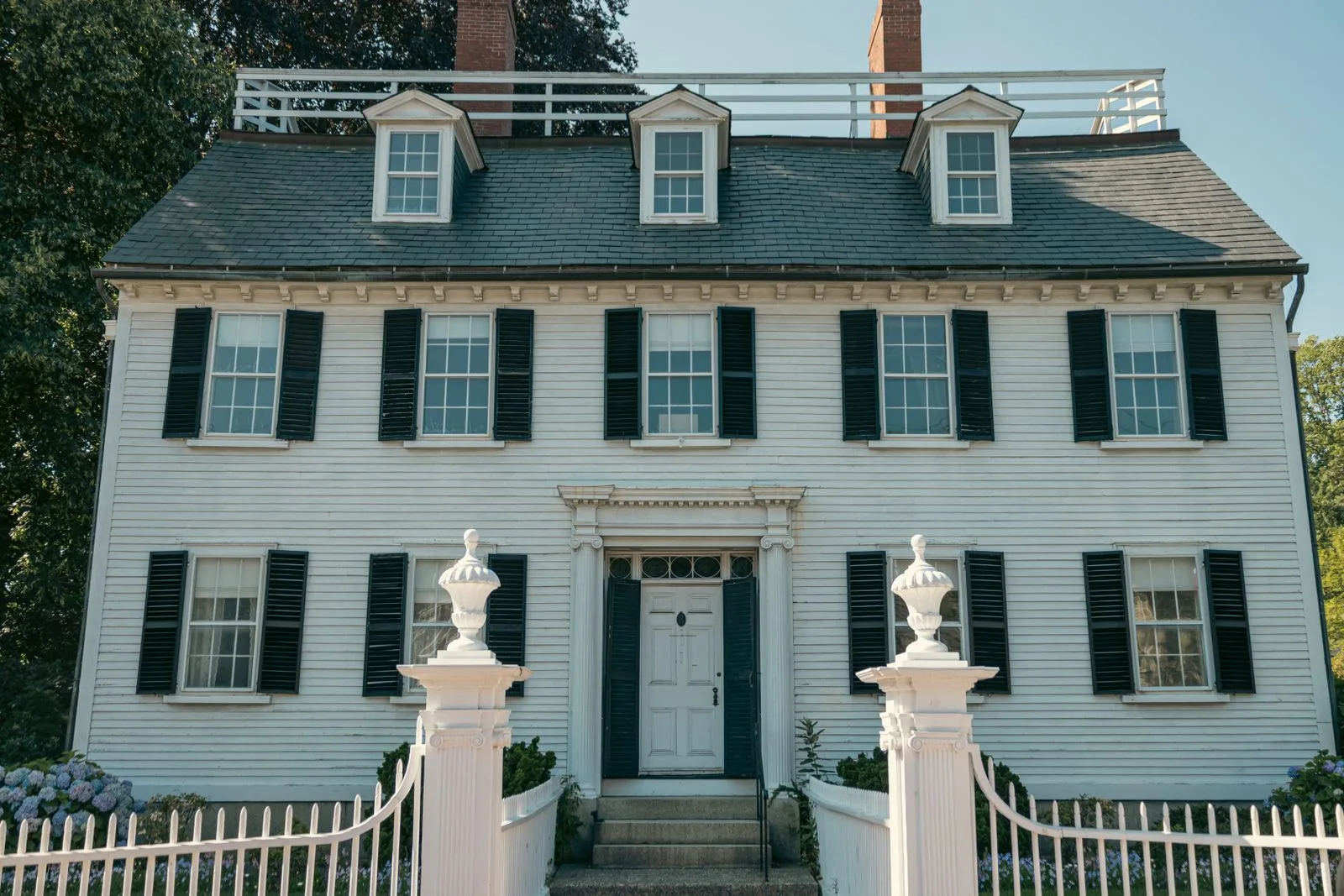
A 1790s Portsmouth Federal, a Connecticut center-hall colonial or a Maine farmhouse can cost far more per square foot to rebuild than a newer house, because of materials and craftsmanship that are hard to match. That’s why rebuild cost, not purchase price or tax assessment, should drive your limit. See older and historic home insurance in New Hampshire and replacement cost for older Fairfield County colonials.
Back to all comparisons: Compare insurance options. Related: homeowners insurance and specialty dwelling insurance.
Frequently asked questions
Is my home’s market value the same as its replacement cost?
No. Market value includes the land and reflects what a buyer would pay. Replacement cost is what it would cost to rebuild the house with similar materials at today’s labor and material prices. On the Seacoast, land can make market value much higher than rebuild cost; for an older home with plaster walls and custom trim, rebuild cost can be higher than you’d expect. Try our home replacement cost estimator as a starting point.
What is the 80% rule?
Many homeowners policies pay full replacement cost on a partial loss only if your dwelling limit is at least 80% of the home’s replacement cost at the time of the loss. If it’s lower, the policy may pay less. Keeping your dwelling limit current, especially after renovations, protects you from that surprise.
Why did my roof claim pay less than the cost of a new roof?
Some policies settle roof damage on an actual cash value basis or use a roof payment schedule, especially for older roofs. That means depreciation is taken off the payment. Check your declarations page and endorsements for roof settlement terms, and ask us before your renewal if you’re not sure.
Can I get replacement cost on my belongings?
Often, yes. Some homeowners policies settle personal property at actual cash value unless you add replacement cost coverage for contents, while others include it. It’s worth checking, because the gap between a used couch’s depreciated value and the price of a new one adds up fast.
Are landlord policies replacement cost or actual cash value?
It depends on the form. A basic dwelling fire policy (DP-1) usually pays actual cash value. A DP-3 usually pays replacement cost on the building and actual cash value on your personal property. See our landlord insurance page and our post on dwelling fire vs. homeowners insurance.
Does replacement cost pay to bring my house up to current building code?
Not by itself. The added cost of meeting current code after a loss is covered by ordinance or law coverage, which is usually a separate limit or endorsement. For older New England homes, it’s one of the most important add-ons to review.
Have us check how your policy pays
Send your declarations page and we’ll show you how your dwelling, roof and contents would be settled, then compare options from carriers that fit. We don’t charge any fees. Call (603) 431-4020, email insure@portsmouthatlanticins.com or start your quote online.