
By Jon Merwin, Founder and CEO, Licensed Insurance Advisor
What would it take to rebuild your house from the ground up? This estimator starts from U.S. Census Bureau construction figures for new homes in the Northeast, adjusts them for your home’s size, age, finish level and location, and shows a deliberately wide rough range. Add your current dwelling (Coverage A) amount and it will tell you whether that amount looks low, looks in range, or can’t be checked. It doesn’t ask for your name and it doesn’t show an insurance price.
This tool gives a rough estimate for education only. It is not a quote, a coverage offer, or an appraisal. Coverage, eligibility and pricing are set by the insurance company after a full review. A licensed PAI advisor will go over your actual needs.
Estimate what it could take to rebuild your home
Rough estimate; an insurer’s replacement-cost tool and a quote replace this.
Request a home quote
We’ll run your home through carrier replacement-cost tools and compare options. If you used the estimator above, your answers fill in the notes for you. Prefer to talk? Call (603) 431-4020.
Market value isn’t rebuild cost
Market value
What a buyer would pay. It includes the land, the location and the real estate market, none of which burn down.
Rebuild cost
What it would take to tear out the damage and rebuild the house with like kind and quality materials, to today’s codes.
Coverage A
The dwelling limit on your homeowners policy. Insurers set it from a replacement-cost estimate, not from your sale price or mortgage.
Your sale price and your rebuild cost answer different questions. The NAIC explains that replacement cost coverage pays to repair or replace damage with materials of like kind and quality, while market value includes the land and depends on the real estate market. A small lot in a pricey town can sell for far more than it would cost to rebuild the house; an older, detailed home in a quieter market can cost more to rebuild than it would sell for.
That’s why Coverage A shouldn’t simply match your purchase price or mortgage. The New York Department of Financial Services notes that insurers estimate replacement cost with formulas that weigh construction type, square footage, number of floors and rooms, and that many policies reduce payment on a partial loss if a home is insured for less than 80% of its replacement cost.
What pushes rebuild cost up
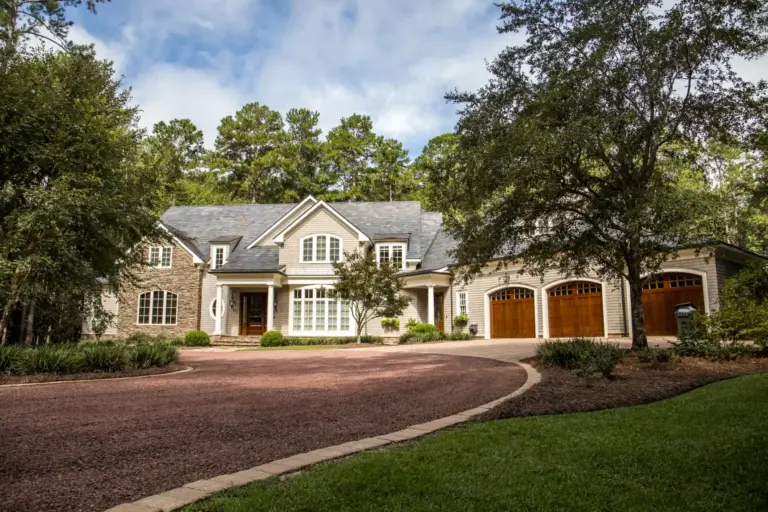
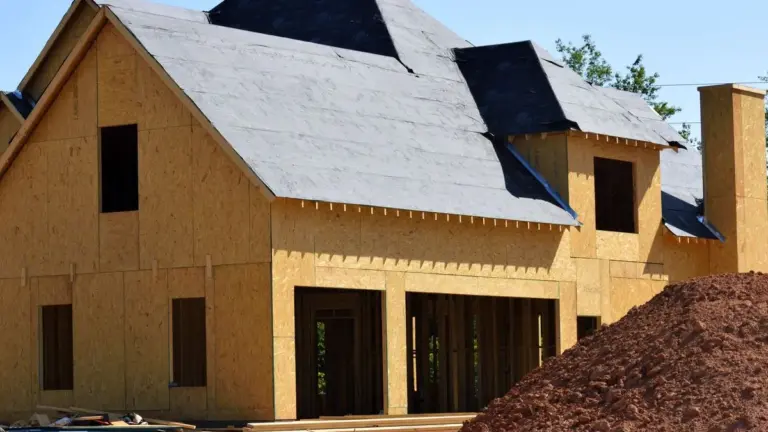
These six factors show up again and again when New England homes are rebuilt. The estimator flags the ones that apply to your answers.



How the estimator works
- Starting point: the U.S. Census Bureau’s 2025 figures for new contractor-built single-family houses started in the Northeast, which leave out the land. Standard finish uses the median contract price per square foot ($179.30); upgraded uses the average ($246.26), which higher-end homes pull up; custom uses the average times 1.35.
- Rebuild after a loss: times 1.10, for demolition, debris removal and rebuilding a single house rather than one of many in a new development.
- Age: built 2000 or later times 1.00, 1970 to 1999 times 1.05, 1940 to 1969 times 1.10, before 1940 times 1.20. Unknown year is treated as 1970 to 1999.
- Stories: one story or three-plus stories times 1.05 (more foundation and roof per square foot, or more complex framing); 1.5 to 2 stories times 1.00.
- Construction, coast and materials: masonry walls times 1.10; within about a mile of the ocean or in a FEMA flood zone times 1.10; older or special materials such as plaster, slate or hand-cut trim times 1.10.
- Area: finished living area, plus a finished basement (half or all of the footprint) at half weight, plus an attached garage (260, 480 or 720 sq ft) at 40%. Each fireplace or wood stove adds 3%, up to three.
- The range: 25% below to 25% above the middle figure, rounded to the nearest $10,000 ($50,000 above $1 million). If your Coverage A amount is below the bottom of the range, the tool says it looks low and may be worth reviewing.
| Census figure used | Northeast | United States |
|---|---|---|
| Median contract price per sq ft, new contractor-built single-family houses started, 2025 | $179.30 | $171.57 |
| Average contract price per sq ft, same houses, 2025 | $246.26 | $198.33 |
The multipliers are PAI’s own rough assumptions to show how these factors move cost. They aren’t carrier figures and they aren’t from a commercial cost database. The Census numbers describe new homes built in 2025, so building costs in your town today may differ. That’s exactly why the result is a wide range and why a carrier’s replacement-cost tool, which looks at far more detail, replaces it.
When your dwelling amount may be worth reviewing
- You’ve remodeled a kitchen or bath, finished a basement, or added a room since your policy was set up.
- Your Coverage A was set years ago, or simply matches your purchase price or mortgage.
- Your home is older and has plaster, slate, custom windows or other details that are hard to match.
- You’re near the coast or in a FEMA flood zone, where rebuilds can face stricter codes. Flood damage itself needs a separate flood policy.
- You’re not sure whether your policy has extended replacement cost or enough ordinance or law coverage.
Rebuild-cost help from an independent agency
Portsmouth Atlantic Insurance is a family-owned independent agency founded in 2005. When you request a home quote, we run your home through carrier replacement-cost tools and compare options across 40+ carriers, including extended replacement cost and ordinance or law choices. We’re based in Portsmouth, NH, we also have a Connecticut office, and we’re licensed in 10 states with a New England focus. Our clients have shared 1,000+ Google reviews and over 2,000 testimonials. Call (603) 431-4020.
Learn more on our homeowners insurance page, or read about home insurance in New Hampshire, Connecticut and Massachusetts. For larger homes, see high-value home insurance in New Hampshire, Connecticut or Massachusetts. Own an older home? Our historic home insurance guide covers matching original materials, and our homeowners coverage guide explains Coverage A through F. Near the water, read about coastal flood and wind coverage and FORTIFIED roofs, check your address with our flood zone check, and see our flood insurance page. Weighing liability too? Try our umbrella insurance calculator.
Home replacement cost estimator FAQ
What’s the difference between replacement cost and market value?
Market value is what your home would sell for, and it includes the land and the real estate market. Replacement cost is what it would take to rebuild the house itself with materials of like kind and quality. The NAIC and the New York Department of Financial Services both point out that the two aren’t the same, and that land isn’t part of what a homeowners policy rebuilds. In coastal and older New England neighborhoods the gap can go either way.
How much dwelling coverage (Coverage A) should my home have?
Consumer guidance from the NAIC says your dwelling coverage should equal the full replacement cost of your home, and the New York Department of Financial Services notes that many policies reduce payment on a partial loss if you insure for less than 80% of replacement cost. Insurers estimate replacement cost with tools that weigh square footage, construction, stories and finishes. A licensed advisor can walk you through that estimate.
Where do the estimator’s numbers come from?
The starting figures come from the U.S. Census Bureau’s Survey of Construction: the median ($179.30) and average ($246.26) contract price per square foot of new contractor-built single-family houses started in the Northeast in 2025, which leave out the land. PAI then applies rough, clearly labeled multipliers for rebuilding after a loss, age, stories, construction, coastal location and special materials, and shows a wide range of 25% either side. They aren’t carrier figures, and an insurer’s replacement-cost tool will look at far more detail.
What is ordinance or law coverage?
When a damaged home is rebuilt, it usually has to meet today’s building, energy and zoning codes, which can cost more than rebuilding it the way it was. Ordinance or law coverage helps pay for those code-required upgrades. Many homeowners policies include a limited amount, and more is often available. It matters most for older homes and homes near the coast.
What is extended replacement cost?
Extended replacement cost is an option on many homeowners policies that adds an extra percentage above your dwelling limit if rebuilding costs more than expected, for example after a regional storm drives up labor and materials. The percentage and the rules vary by carrier and policy. We compare these options when we quote.
Can PAI quote my home?
We’re licensed in 10 states with a New England focus: Maine, New Hampshire, Vermont, Massachusetts, Rhode Island, Connecticut, New York, Florida, Ohio and Illinois. If your home is in one of them, request a home quote below or call (603) 431-4020. The estimator doesn’t show an insurance price, because that depends on the carrier and a full review of your home.
Ready for a real number? Request a home quote. We’ll run your home through carrier replacement-cost tools and compare options. Or contact us and call (603) 431-4020.
Sources: U.S. Census Bureau, Characteristics of New Housing 2025, Median and Average Contract Price per Square Foot of New Contractor-Built Single-Family Houses Started (XLS); U.S. Census Bureau, Characteristics of New Housing, annual tables; NAIC, What’s the Difference Between Actual Cash Value Coverage and Replacement Cost Coverage?; New York Department of Financial Services, homeowners guide to deciding how much insurance to carry.