High-valueCT
By Jon Merwin, Founder and CEO
Key takeaways
- High-value home insurance in Connecticut is built around the cost to rebuild a custom home, broad coverage for valuables and liability limits that match your assets.
- Connecticut law limits when a hurricane deductible can apply. Connecticut Insurance Department (CID) guidelines cap it at 5% within 2,600 feet of the coast and 2% farther inland.
- Storm surge from Long Island Sound is treated as flood, which homeowners policies exclude. NFIP building coverage stops at $250,000, so many shoreline homes need excess or private flood.
- We compare high-value carriers for Connecticut homes. Under about $2 million, most of our 40+ carriers are options. Cincinnati and Chubb both write homes at any dwelling limit, so we quote both. Cincinnati usually wants at least about $150,000 in dwelling coverage. Openly, National General, Hanover and Andover are also options for many Connecticut homes.
- If the regular market will not write a property, the Connecticut FAIR Plan is the market of last resort.
High-value home insurance in Connecticut covers homes whose rebuild cost, contents and liability exposure go beyond what a standard homeowners policy is designed for. A strong policy insures the home for what it would cost to rebuild to its original quality, schedules jewelry and art at agreed values, and coordinates home, auto and umbrella liability. In Connecticut it also has to account for state rules on hurricane deductibles and the separate question of flood coverage along Long Island Sound. Portsmouth Atlantic Insurance reviews these policies for homeowners across the state.
New Hampshire’s highest-rated agency on Google · 1,000+ Google reviews and over 2,000 testimonials. Request a quote. There’s no obligation to buy.
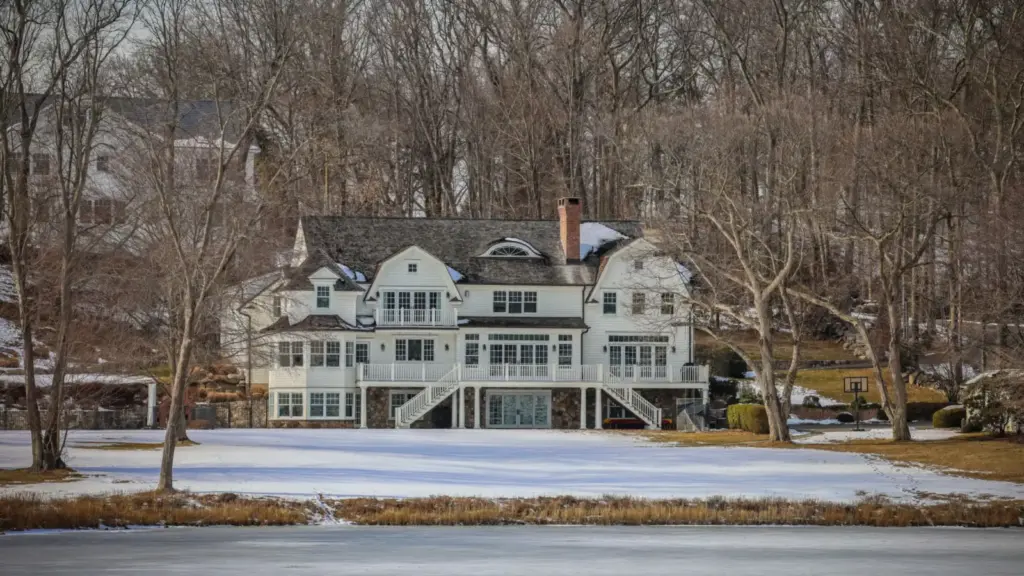
This page covers the whole state: the Gold Coast, the central shoreline, the Litchfield Hills and the Hartford County suburbs. For Stratford specifics, see our page on high-value home insurance in Stratford, CT.
What makes a Connecticut home "high-value" to an insurer?
Carriers look less at the sale price and more at what it would take to rebuild. A Greenwich estate, a renovated antique colonial in Litchfield County and a contemporary on the Madison shore can all fall into high-value underwriting because of custom materials, size, historic detail or the value of what is inside. Underwriters typically review:
- Rebuild cost, often set by an on-site appraisal that accounts for millwork, stone, slate or copper roofing and specialty systems.
- Exposure, including distance to the coast, elevation, tree cover and the local fire protection rating.
- Protective systems, such as central-station fire and burglar alarms, water-leak and low-temperature sensors, automatic water shutoff valves and generators.
- Occupancy, including second homes, seasonal vacancy, household staff and any rental use.
How do hurricane deductibles work on a high-value Connecticut home?
Connecticut regulates hurricane deductibles closely. According to the CID, an insurer may apply a hurricane deductible instead of the regular deductible only if the damage occurs after the National Hurricane Center issues a hurricane warning for any part of the state, and only if the hurricane produces maximum sustained winds of 74 miles per hour or more somewhere in Connecticut. The CID also states that hurricane deductibles are different from windstorm or hail deductibles, and that insurers in Connecticut may not mandate windstorm or hail deductibles.
Under the CID’s coastal underwriting guidelines, a hurricane deductible may not exceed 5% within 2,600 feet of the coast, or 2% farther inland. The percentage and dollar amount must appear on your declarations page. The CID also notes that, after an amendment to Conn. Gen. Stat. § 38a-316a, insurers may not require storm shutters or other mitigation products. On a home with a high dwelling limit, a percentage deductible can be a large dollar figure, so it is worth reviewing before the season rather than after a storm. (As of October 3, 2026.)
| Item on your declarations page | What to confirm |
|---|---|
| Hurricane deductible | The percentage, the dollar amount, and whether the home is inside or outside 2,600 feet of the coast |
| All-other-perils deductible | The flat deductible that applies to non-hurricane losses |
| Windstorm or hail deductible | Whether one appears, and why |
| Dwelling limit | Whether it reflects a current rebuild estimate, since a percentage deductible is calculated from it |
| Flood | Whether you have a separate NFIP, excess or private flood policy |
Where in Connecticut do high-value coverage needs differ?
| Region | Example towns | Typical coverage focus |
|---|---|---|
| Gold Coast | Greenwich, Darien, New Canaan, Westport | Estate rebuild cost, fine art and jewelry, household employees, high umbrella limits |
| Central shoreline | Stratford, Fairfield, Milford, Norwalk, Stamford | Hurricane deductibles, storm surge, excess or private flood, elevation information |
| Litchfield Hills | Washington, Kent, Salisbury and nearby second-home towns | Seasonal vacancy, private wells and septic, tree-fall and ice damage, remote fire protection |
| Hartford County | Avon, Farmington, West Hartford | Large suburban homes, finished lower levels, water backup, home and auto with one carrier |
Metro-North commuters with several drivers and vehicles at home should line up auto liability limits with the umbrella policy, since the umbrella sits on top of both home and auto.
What should a Connecticut high-value home policy include?
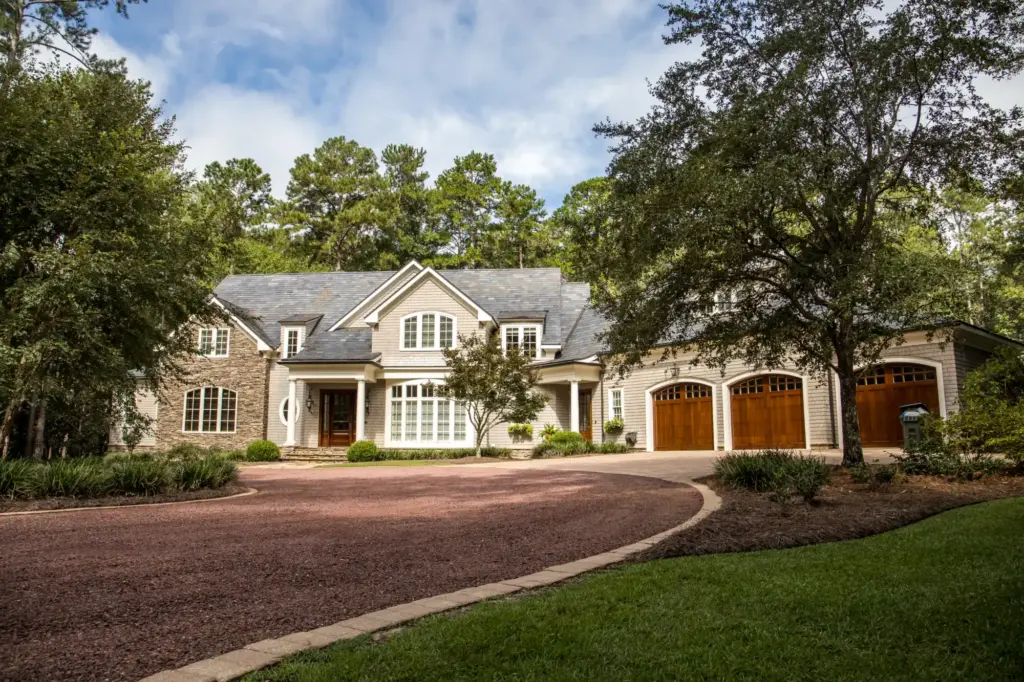
- Replacement cost terms. Ask whether the policy offers extended or guaranteed replacement cost, and whether it includes ordinance or law coverage for code upgrades after a loss.
- Valuables. Jewelry, watches, art, wine and collections scheduled at agreed values rather than falling under standard special limits.
- Water damage. Water backup coverage and leak-detection options, especially for finished lower levels.
- Liability and umbrella. Home liability limits that meet the umbrella’s requirements, with the umbrella sized to your assets.
- More than one property. A Fairfield County primary home, a Litchfield Hills weekend house or a home in another state. We are licensed in 10 states.
Insuring a shoreline or Fairfield County home?
Request a high-value home and hurricane-deductible review: (603) 431-4020.
Does homeowners insurance cover storm surge from Long Island Sound?
No. The CID states that homeowners policies exclude damage caused by flooding, and storm surge is generally treated as flood. Flood coverage requires a separate policy. FloodSmart.gov states that NFIP building policies cover up to $250,000 and contents up to $100,000, which is often well below the value of a shoreline home. Excess flood coverage over an NFIP policy, or a private flood policy with higher limits, can close that gap. NFIP coverage usually starts 30 days after purchase, with limited exceptions. As of October 3, 2026, the NFIP is authorized through December 11, 2026.
Check the property on FEMA’s Flood Map Service Center, and see our page on coastal home and flood insurance in Connecticut.
What if an insurer will not write or renew a shoreline home?
Because we work with 40+ carriers, a decline from one company does not end the search. If the regular market cannot place a property, the Connecticut FAIR Plan provides property insurance to applicants who have not been able to obtain it through the normal market, provided the property meets reasonable underwriting standards. The FAIR Plan’s site also describes its Coastal Market Assistance Program (C-MAP). FAIR Plan coverage is generally narrower than a high-value policy, so we explain the differences before you decide.
Which carriers write high-value homes in Connecticut?
The right carrier depends on the home’s rebuild cost, construction, distance to the water and the rest of what you need to insure: cars, valuables, boats and umbrella liability. We have been independent since 2005, and our clients have shared 1,000+ Google reviews and over 2,000 testimonials.
- Homes with rebuild costs around $2-3 million: Openly, National General, Hanover and Andover can all be options, and under about $2 million most of our 40+ carriers are in play. Cincinnati and Chubb both write homes at any dwelling limit, so we quote both.
- Up to about $5 million: Openly and National General.
Why we quote Cincinnati at any dwelling limit
Cincinnati Insurance sells only through independent agencies like ours, and it has built out its high net worth business over the past decade. In 2014 it formed dedicated high net worth underwriting and inspection teams and raised capacity on its Executive Classic homeowner product to homes up to $10 million (Cincinnati Financial, 2014). In 2015 it launched Executive Capstone, a suite of high net worth home, auto, watercraft, valuables and excess liability coverages, starting with homes valued up to $50 million in New York (Cincinnati Financial, 2015). Capstone has since expanded to more states, with umbrella liability options up to $50 million (Cincinnati Financial, 2017).
Which Cincinnati form applies to a Connecticut home depends on the property, so we confirm it with Cincinnati when we quote. Read our Cincinnati Insurance review for more.
Chubb
Chubb is a long-established high-value carrier and a strong fit for many Connecticut estates. We quote Chubb alongside Cincinnati so you can compare coverage side by side. See our Chubb review.
 Expert tip from Jon Merwin, Founder and CEO, Portsmouth Atlantic Insurance
“For Connecticut homeowners, the inflation of the past few years has pushed dwelling replacement costs up. The goal posts have shifted, and the dwelling coverage we’re seeing on Connecticut homes is much higher than it used to be. Insurance companies are adjusting too, and expanding their appetite to write higher-value homes.”
— Jon Merwin, Founder and CEO, Portsmouth Atlantic Insurance
Before renewal: a Connecticut high-value checklist
- Find the hurricane deductible percentage and dollar amount on the declarations page.
- Confirm whether the home is within 2,600 feet of the coast.
- Get a current rebuild cost estimate.
- Schedule jewelry, art, wine and collections.
- Check NFIP, excess or private flood limits against the home’s value.
- Match home and auto liability to the umbrella.
- Tell your agent about household staff, rentals or seasonal vacancy.
Learn more about our Connecticut insurance agency and the communities we serve.
Cincinnati vs. Chubb for Connecticut high-value homes
Both sell through independent agencies. Neither is the right answer for every home, so we quote both and compare them line by line.
- Cincinnati and Chubb both write homes at any dwelling limit, so we quote both.
- What to compare: how each carrier values the dwelling (guaranteed or extended replacement cost), the hurricane deductible, water backup limits, scheduled valuables, and whether home, auto, umbrella and collections can sit with one carrier.
- Underwriting: both carriers typically inspect high-value homes inside and out, and water-leak detection is usually required. Expect questions about alarms and shoreline exposure too.
- Package fit: both offer high-value auto, umbrella and valuables coverage. We look at whether keeping everything with one carrier or splitting it gives you better coverage.
For detail on each carrier, see our Cincinnati Insurance review and Chubb review.
High-value home insurance by Connecticut town
Coverage needs change from town to town: shoreline flood zones, Backcountry fire protection, older homes that cost more to rebuild. Start with your town below. Linked towns have their own pages. For the others, the guidance on this page applies, and we can review your home.
Fairfield County Gold Coast
- Greenwich: Greenwich high-value home insurance (sections on the Backcountry, Old Greenwich, Riverside and Cos Cob) · Greenwich insurance agency
- Darien: Darien high-value home insurance (sections on Tokeneke, Long Neck Point and Noroton) · Darien insurance agency
- New Canaan: New Canaan high-value home insurance · New Canaan insurance agency
- Wilton: Wilton high-value home insurance · Wilton insurance agency
- Ridgefield: Ridgefield high-value home insurance · Ridgefield insurance agency
- Roxbury and Bridgewater: Roxbury and Bridgewater high-value home insurance
- Litchfield Hills: Litchfield Hills high-value home insurance (regional guide)
- Goshen: Goshen insurance agency (Woodridge Lake and Tyler Lake second homes)
- Sherman: Sherman high-value home insurance · Sherman insurance agency
- Southport: Southport high-value home insurance
- Fairfield: Fairfield insurance agency · Greenfield Hill home insurance
- Weston: Weston high-value home insurance
- Westport, Redding
- Stratford: Stratford high-value home insurance
New Haven County shoreline
Madison, Guilford, Branford and Orange.
Hartford suburbs
- Hartford County: Hartford County, CT home insurance (county guide)
- Avon: Avon insurance agency
- Farmington: Farmington insurance agency
- Glastonbury: Glastonbury insurance agency
- Simsbury: Simsbury insurance agency
- Bethany: Bethany insurance agency
- West Hartford
Frequently asked questions
When can a hurricane deductible apply in Connecticut?
According to the Connecticut Insurance Department, only when damage occurs after the National Hurricane Center issues a hurricane warning for any part of the state and the hurricane produces maximum sustained winds of 74 miles per hour or more somewhere in Connecticut.
How large can a hurricane deductible be in Connecticut?
Under CID coastal underwriting guidelines, a hurricane deductible may not exceed 5% for homes within 2,600 feet of the coast, or 2% for homes farther inland. The percentage and dollar amount appear on the declarations page.
Does homeowners insurance cover storm surge in Connecticut?
No. Storm surge is generally treated as flood, and homeowners policies exclude flood. You need a separate NFIP, excess or private flood policy.
Is NFIP flood insurance enough for a high-value shoreline home?
Often not. NFIP building coverage is capped at $250,000 and contents at $100,000. Owners of higher-value homes often add excess flood coverage or use a private flood policy with higher limits.
Which carriers insure high-value homes in Connecticut?
Under about $2 million, we shop most of our 40+ carriers, and for larger homes we also compare Hanover, Andover, Openly and National General. Cincinnati and Chubb both write homes at any dwelling limit, so we quote both. Hanover generally fits homes up to about $2-3 million. Andover’s Connecticut limit is about $2.25 million, sometimes higher with underwriting approval, which covers many homes from Fairfield County’s shoreline towns to the Litchfield Hills. Openly and National General fit homes up to about $5 million. Which one fits depends on the home, its location and the coverage you need.
Does Cincinnati Insurance write high-value homes in Connecticut?
Yes. Cincinnati writes high net worth home insurance through independent agencies, including ours. We confirm the specific policy form and eligibility for each home when we quote.
What is the Connecticut FAIR Plan?
The CT FAIR Plan provides property insurance to applicants who have not been able to obtain it through the normal insurance market, as long as the property meets reasonable underwriting standards. It is a market of last resort.
Sources
- Connecticut Insurance Department, "Homeowners Storm Claims"
- Connecticut Insurance Department, "Important Notice: Underwriting Coastal Homeowners’ Insurance Policies"
- Connecticut General Assembly, "Chapter 700 – Property and Casualty Insurance" (Sec. 38a-316a)
- Connecticut Insurance Department, "Homeowner’s and Renter’s Insurance"
- Connecticut FAIR Plan, "Welcome to CT FAIR Plan"
- FloodSmart.gov (NFIP), "Buy a Flood Insurance Policy"
- FEMA, "Congressional Reauthorization for the National Flood Insurance Program"
- FEMA, "FEMA Flood Map Service Center"
Review your Connecticut high-value home coverage
We can compare high-value home, flood and umbrella options. Call (603) 431-4020.
40+ carriers · New Hampshire’s highest-rated agency on Google · 1,000+ Google reviews and over 2,000 testimonials. Request a quote. There’s no obligation to buy.
Jon Merwin, Founder and CEO
By Jon Merwin, Founder and CEO. Meet our team.
Portsmouth Atlantic Insurance has been an independent agency since 2005, is licensed in 10 states and compares 40+ carriers.