
Coastal Home Insurance in Connecticut: What High-Value Homeowners Often Discover Too Late
Coastal living in Connecticut offers waterfront views, historic architecture, and long-term property value that few regions can match. Communities such as Old Greenwich, Riverside, and Old Saybrook attract homeowners who view their residence as both a lifestyle choice and a significant financial asset. Across the Connecticut River from Old Saybrook, see our Lyme, CT home insurance page for Lyme and Old Lyme.
What many high-value homeowners discover only after a major storm is that coastal insurance risk is not about whether coverage exists. It is about whether the coverage structure responds predictably when flood exposure, wind damage, and rebuild costs occur at the same time.
Coastal home insurance in Connecticut requires planning that accounts for shoreline risk, rebuilding constraints, and coordinated policy design.
Table of Contents
Why High-Value Coastal Homes in Connecticut Require Specialized Insurance Planning
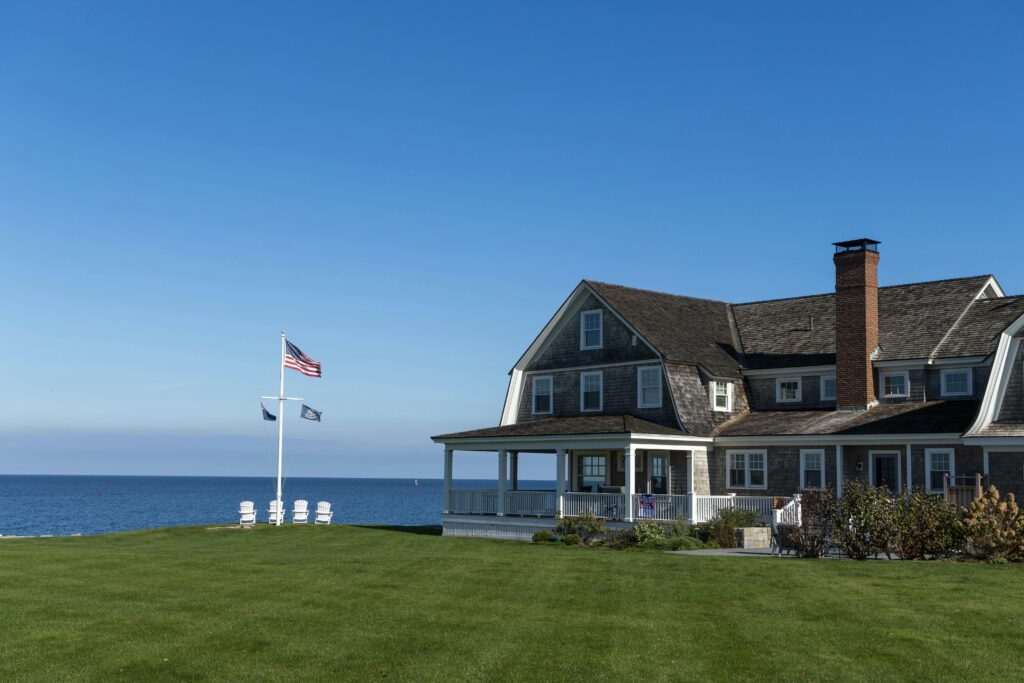
Coastal properties face higher severity losses and more complex claims scenarios than inland homes. Insurance planning must address flood, wind, and rebuild exposure together rather than treating each risk in isolation.
Flood Risk for Coastal Homes Outside High-Risk Flood Zones
Storm surge, tidal overflow, and heavy rain during coastal storms can cause flooding outside FEMA high-risk flood zones, too. When deciding whether or not to buy flood insurance, don’t just look at the flood zone labels. Also think about how close you are to water and how storms behave.
Wind and Storm Damage Risks for Connecticut Shoreline Properties
Strong winds and wind-driven rain can damage roofs, windows, siding and the inside of a house. Losses often happen because of both wind and floods, which makes coordinated coverage even more important to avoid delays in claims.
Why Rebuild Costs Are Higher for Coastal Homes in Connecticut
Because of elevation requirements, coastal building codes, a lack of available contractors, and the need to use high-end materials again, rebuilding on the shoreline costs more. Assumptions about rebuilding inland often don’t take into account the real costs of replacing things on the coast.
Many homeowners near the shore are not required by their lender to carry flood insurance.
But that only tells you what the lender requires. It says nothing about whether water can reach your home. Flood insurance decisions based solely on requirement rather than exposure often leave homeowners self-funding losses they never expected to absorb.
Seeing this distinction clearly often changes how flood coverage is evaluated.
Flood Insurance for High-Value Homes in Connecticut: What Homeowners Should Know
People often don’t understand how to plan for flood damage when they live on the coast. Many homeowners assume their homeowners policy includes flood protection, but in practice, it does not. Understanding how flood insurance works for coastal properties is an important starting point.
NFIP Flood Insurance Limits for Luxury Coastal Properties
The National Flood Insurance Program provides baseline coverage, but NFIP building coverage tops out at $250,000 (and $100,000 for contents), which often falls short of the replacement cost for high-value coastal homes. This gap frequently becomes clear only after a significant loss. When an NFIP policy is part of the plan, new NFIP flood policies we write go through Selective.
Private Flood Insurance for High-Value Coastal Homes
Private flood insurance can offer higher limits, broader coverage definitions, and greater flexibility for basements and lower levels. For many coastal properties, it can help close the gap between NFIP limits and the real cost to rebuild. We shop private flood coverage with carriers including Flow Flood, Neptune Flood, Beyond Floods, The Flood Insurance Agency, CatCoverage and Aon Edge. Availability, limits and pricing depend on the property, so we compare the options for your home.
For coastal homes with lower levels, understanding how basement flooding is treated under insurance policies becomes especially relevant.
Coordinating Flood and Homeowners Insurance
Flood and homeowners insurance should be set up so that they work together. If definitions or deductibles aren’t in line with each other, it can be hard to understand and lead to losses that aren’t covered during claims.
Wind Coverage and Deductibles in Coastal Home Insurance Policies
Wind coverage exists in most coastal policies, but deductible structures are often overlooked.
Hurricane Deductibles in Connecticut
In Connecticut, a homeowners policy can apply a hurricane deductible only when the trigger set by state law is met: the National Hurricane Center has issued a hurricane warning for part of the state, and the hurricane brings sustained winds of 74 mph or more to some part of Connecticut. The window closes 24 hours after the last warning ends or the storm is downgraded. When it does apply, a hurricane deductible is usually a percentage of the home’s insured value, so for high-value homes it can mean significant out-of-pocket costs after a single storm. Your declarations page lists the percentage and the dollar amount. Connecticut law also requires insurers to offer a premium discount if you install permanent storm shutters or impact-resistant glass, so ask about it if you have made those upgrades.
Understanding Wind Damage Versus Flood Damage
Wind-driven rain may be covered under homeowners insurance, while storm surge requires flood insurance. Clear policy language and coordinated design reduce disputes when losses involve both elements.
In some cases, losses may involve drainage or sewer-related issues rather than storm surge alone, which is where water backup coverage becomes relevant.
Private Coastal Coverage Review for High-Value Homes
Most coastal homeowners are insured, but unsure how their policies would respond if wind and flood losses occurred together.
A private coverage review identifies where protection is clear, where it is ambiguous, and where gaps typically appear before a claim forces the issue.
What to Consider When Getting Coastal Home Insurance in Old Greenwich, Riverside, and Old Saybrook
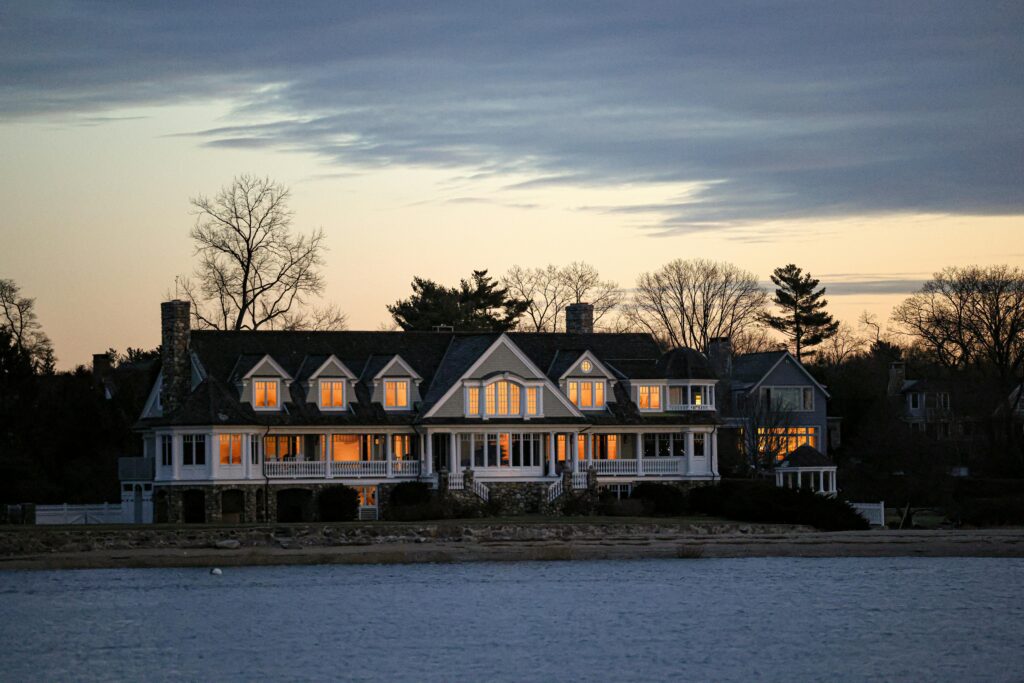
Local conditions have a big effect on coastal insurance planning.
In shoreline communities, insurance decisions often mirror those made in nearby markets such as Greenwich and Westport, where luxury home insurance considerations differ significantly from standard coverage.
Flood Zones and Insurance Requirements
Flood zones differ from property to property, and they have a direct impact on insurance requirements and costs. In Old Greenwich, Riverside, and Old Saybrook, it is very important to do accurate zone analysis.
Elevation and Coastal Rebuild Challenges
Homes that have to follow new elevation standards will cost more to rebuild and take longer. Insurance limits should be based on what needs to be done after a loss.
Shoreline Regulations and Ordinance and Law Coverage
State and local shoreline rules can make rebuilding more expensive. Coverage for laws and ordinances helps pay for compliance costs after a loss.
Our Insurance Partners for High-Value Coastal Homes in Connecticut
Protecting high-value coastal properties requires working with insurers that specialize in complex risk, coastal exposure, and high-value claims. We write high-value coastal homes with Chubb, Cincinnati Insurance, Hanover, Openly, National General and Andover Companies.
Each carrier offers different strengths in areas such as options that can help with rebuilding costs (depending on the policy), claims service, portfolio complexity, and underwriting flexibility. Selecting the appropriate insurer is not about brand recognition alone. It directly affects how rebuild costs are handled, how claims move after a storm, and how flood and wind losses are coordinated.
Matching the right insurance partner to the right coastal property is a critical step in reducing uncertainty and improving outcomes after a loss.
Coordinating Home and Flood Insurance for High-Value Coastal Properties
Planning for coastal insurance that works means more than just buying separate policies.
How Home and Flood Insurance Should Work Together
Your homeowners insurance policy and flood coverage should work together so that claims don’t have gaps or delays when both exposures occur.
Why Coordinated Policy Design Matters
Coordinated policy design makes claims more likely to be successful and gives you more financial certainty, especially for custom homes and estates.
When High-Value Coastal Homeowners Should Review Coverage
Good times to review your coverage are before storm season, after renovations, and when property values go up or down.
The key question is whether the current insurance structure would respond predictably if a major coastal storm occurred this year.
For a broader context on coastal and flood risk trends, resources from the Insurance Information Institute offer useful industry insight.
Would your insurance respond predictably if a major coastal storm occurred this season?
Most coastal insurance structures look solid until they are tested. Once a storm creates deadlines, options narrow quickly. A coordinated review of home, flood, and wind coverage helps identify where assumptions may not hold, while adjustments are still deliberate rather than reactive.
If you own a coastal property in Old Greenwich, Riverside, Old Saybrook, or another Connecticut shoreline community, a confidential review helps check whether your coverage reflects real rebuild conditions rather than assumptions.
Request a Confidential Coastal Insurance Review
Storm deductibles: what to ask before storm season
On a coastal Connecticut homeowners policy, the deductible for a kitchen fire is often not the one that applies to a major wind event. Many carriers use a percentage of dwelling coverage for hurricane, named-storm or wind/hail losses, and the exact trigger and percentage vary by carrier and policy. Ask us to walk through, in plain English:
- Which trigger language applies: hurricane, named storm or wind/hail?
- Is the storm deductible a percentage or a flat dollar amount, and what is it in dollars?
- How does it interact with your flood policy if surge and wind both cause damage?
- Are there mitigation credits (roof age and type, opening protection) worth documenting?
There is no single right deductible for every Long Island Sound home. The right structure depends on the property, the carrier and how much you are comfortable paying out of pocket.
Shoreline communities we help
We work with homeowners and buyers in Stratford (including shoreline and wetland-adjacent neighborhoods), Milford, Bridgeport shoreline areas, Fairfield, Westport and Southport, and across Fairfield County. For flood-specific guidance in the county, see our page on flood insurance in Fairfield County, CT.
We start with the address, year built and updates, roof details, any claims history you want to share, and lender flood paperwork if you are buying. Then we separate homeowners (including wind deductibles), flood, and water backup or ordinance-and-law coverage, and compare options from 40+ carriers. You choose, with no obligation. Call (603) 431-4020 or request a coastal coverage review.
Sources
- Connecticut Insurance Department, Homeowners Storm Claims
- Connecticut General Assembly, Conn. Gen. Stat. § 38a-316a (hurricane deductibles)
- Connecticut General Assembly, Conn. Gen. Stat. Sec. 38a-316b (storm shutter and impact-resistant glass discount)
- FloodSmart (FEMA/NFIP), What’s Covered
- FloodSmart (FEMA/NFIP), What Is a Flood?
- NOAA National Hurricane Center, Storm Surge Overview
FAQs: Coastal Home Insurance in Connecticut
1. Do coastal homes in Connecticut require flood insurance?
Yes. Coastal homes often need separate flood insurance because standard homeowners policies do not cover flood damage. Even if your property is outside a high-risk flood zone, storm surge and heavy rainfall can still cause flooding. Coverage decisions should be based on exposure, not just lender requirements.
2. What does coastal homeowners insurance typically cover?
Coastal homeowners insurance typically covers wind damage, fire, theft, and liability, but not flooding. Policies may include a special hurricane deductible, which Connecticut allows only when its statutory hurricane trigger is met. Because coastal risks are more complex, coverage should be reviewed carefully to understand how wind and water-related losses are handled together.
3. Why are insurance premiums higher for coastal properties?
Premiums are higher because coastal homes face increased risk from storms, wind damage, and flooding. Rebuilding costs are also higher due to stricter building codes and limited contractor availability. Insurers price policies based on both the likelihood of loss and the cost to rebuild after a major event.
4. How do hurricane deductibles work in Connecticut?
In Connecticut, a hurricane deductible can apply only during a hurricane warning for the state when the storm brings sustained winds of 74 mph or more, and it stops applying 24 hours after the warning ends or the storm is downgraded. When it applies, it is usually calculated as a percentage of your home’s insured value, rather than a fixed dollar amount. This means higher-value homes can have significantly larger out-of-pocket costs after a storm, which many homeowners only realize when reviewing a claim scenario.
5. Is private flood insurance better than NFIP coverage?
Private flood insurance can offer higher coverage limits and broader protection compared to NFIP policies. For high-value coastal homes, NFIP limits are often not enough to cover full rebuild costs. Many homeowners use private coverage to better match their property’s actual exposure and value.
6. What happens if wind and flood damage occur at the same time?
When wind and flood damage occur together, claims are handled separately under different policies. Homeowners insurance covers wind-related damage, while flood insurance covers water damage from storm surge. If policies are not coordinated properly, this can lead to delays or uncovered gaps during claims.
7. Myth vs Fact: “If I’m not in a flood zone, I don’t need flood insurance”
Myth. Flood insurance is only necessary in high-risk zones.
Fact. Flooding can occur outside designated zones, especially in coastal areas during major storms. Many homeowners who experience flood losses were not required to carry coverage but still faced significant out-of-pocket costs.
8. How is replacement cost calculated for coastal homes?
Replacement cost is based on what it would take to rebuild your home using similar materials and labor in today’s market. Coastal properties often have higher rebuild costs due to elevation requirements, specialized construction, and local regulations, which standard estimates may not fully reflect.
9. Myth vs Fact: “My homeowners insurance covers all storm damage”
Myth. Homeowners insurance covers all types of storm damage.
Fact. While wind damage is typically covered, flood damage is not. This distinction becomes critical during coastal storms, where both wind and water contribute to losses, requiring separate policies for full protection.
10. When should I review my coastal home insurance policy?
You should review your policy before storm season, after renovations, or when property values change. Regular reviews help keep your coverage in line with current rebuild costs and risk exposure. Many homeowners only identify gaps after a loss, when changes are no longer easy to make.
11. Can you help before my closing on a Connecticut shoreline home?
Yes. Share the purchase contract, flood determination and closing date early. Waiting periods and lender acceptance rules matter, especially if flood coverage must be in force at closing.
For more on coverage across the state, visit our Connecticut insurance agency page, or call us at (603) 431-4020.