
By Jon Merwin, Founder and CEO
- Carriers care less about the year built than about the age of the wiring, plumbing, heating and roof, and who updated them.
- Active knob-and-tube wiring, fuse panels and original plumbing limit the carrier choices; documented updates open them back up.
- Insure an older home for its rebuild cost, not its market value, and choose replacement or functional replacement cost on purpose.
- Ordinance or law coverage pays for code upgrades after a loss, and New Hampshire’s building code reaches repairs to existing homes.
- In a local historic district, no building permit issues until the commission approves, so loss settlement terms and living-expense coverage need room for that.
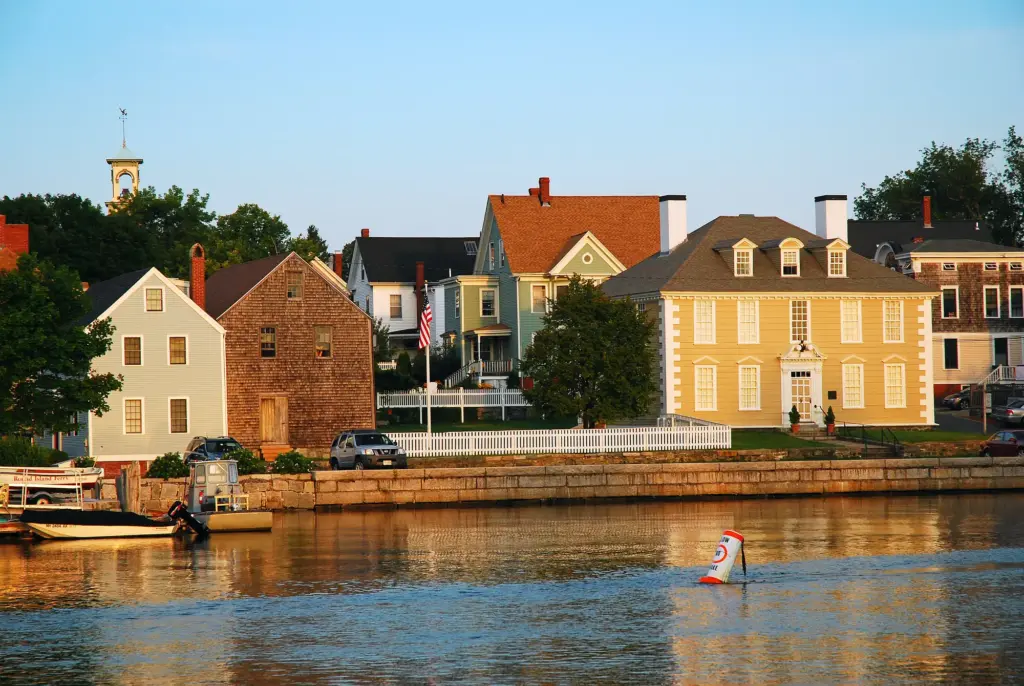
A 1790 Federal in Portsmouth, an 1840s cape on a village green, a farmhouse with an ell and an attached barn: New Hampshire has a lot of old houses, and they are wonderful homes to live in. Older wiring, original plumbing, a roof of unknown age and the real cost of rebuilding plaster walls and hand-planed trim all change which carriers will write the house and how the policy should be built.
Here is what underwriters look at on an older or historic New Hampshire home, the coverage terms that matter most after a loss, and how historic district rules shape a rebuild. There are no dollar figures here; every old house is different, so we explain the pieces and then quote your actual house.
Portsmouth Atlantic Insurance has insured New Hampshire homes since Jon Merwin opened the agency in 2005, and it is still family-owned. As an independent agency licensed in 10 states, we place older and historic homes with 40+ carriers, alongside auto, condo, landlord and flood coverage, and we charge no fees. Our clients have left 1,000+ Google reviews and over 2,000 testimonials. See our New Hampshire homeowners insurance page for the full picture.
What counts as an “older” home to an insurer?
There is no single cutoff. Some carriers start asking extra questions at 40 or 50 years, others at 1940 or earlier. What carriers really want to know is how old each system is and who updated it.
A historic home is a narrower idea: a house listed on the National Register, inside a locally regulated historic district, under a preservation easement, or simply built with materials and craftsmanship that would be hard to reproduce. Those raise a bigger question: what would it cost, and how long would it take, to put the house back the way it was?
Knob-and-tube and other older wiring
Wiring is the first thing most underwriters ask about, because electrical problems are a leading cause of house fires in older homes. Expect questions about:
- Knob-and-tube wiring. Ungrounded wiring run on porcelain knobs, common before the 1940s. Many standard carriers will not write a house with any active knob-and-tube, and others want a licensed electrician’s letter confirming its condition and extent.
- Fuse boxes and small service. A 60-amp fuse panel was normal once, but it struggles with modern loads, and many carriers prefer at least 100-amp breaker service.
- Certain breaker panels. Some underwriters flag specific older panel brands with a history of problems and may ask for replacement.
If you have updated the electrical system, find the invoice or permit. The date, electrician and scope of work are exactly what a carrier asks for.
Plumbing, heating and the water damage question
Water damage is the most common claim on older New Hampshire homes, and the source is often original plumbing. Galvanized steel supply pipes corrode from the inside, older polybutylene lines can fail at fittings, and cast iron drains crack with age. Carriers ask what the supply lines are made of and when they were replaced. A water backup endorsement and service line coverage are worth a look on any older house, and leak detection with an automatic water shutoff can make an older home more attractive to some carriers.
Heating comes up next. Underwriters ask about the age and location of an oil tank, whether a wood or pellet stove was professionally installed and inspected, and the condition of the chimney. Our post on snow and ice damage insurance covers ice dams, frozen pipes and roof collapse.
Roofs on older homes
Roof age and material are among the biggest underwriting factors on any house, and older homes often have the most complicated roofs: slate that can last a century, wood shingles, several layers of asphalt, or low-slope sections over additions. Some carriers settle older roofs at actual cash value instead of replacement cost, or will not write a roof past a certain age at all. Know the roof’s age and keep the receipt. If a carrier has already flagged your roof, read homeowners insurance cancelled because of your roof and will insurance cover a 20-year-old roof?
Rebuild cost versus market value
The dwelling limit on a homeowners policy should reflect what it would cost to rebuild the house, not what it would sell for. On an older home those two numbers can be far apart. Sale value includes the land and the location; the rebuild cost reflects labor and materials. Plaster, wide pine floors, custom millwork, granite foundations and slate are slow and expensive to reproduce, and estimating tools can come in low on a 200-year-old house.
We set the dwelling limit around a realistic rebuild figure and ask about the features that drive it. For larger historic homes, a high-value home policy may offer broader replacement cost terms, such as extended or guaranteed replacement cost where available, and a carrier inspection that documents the details.
Replacement cost or functional replacement cost?
This is the most important choice on an older home, and it should be made on purpose:
- Replacement cost pays to rebuild with materials of like kind and quality. On a historic home that can mean plaster instead of drywall and true divided-light windows instead of modern units. The dwelling limit has to be set high enough to do it.
- Functional replacement cost pays to rebuild with modern materials that do the same job: drywall for plaster, standard trim for hand-carved. Some carriers offer it specifically for older homes where the replacement cost limit would be very high. It can be a reasonable fit for a well-loved older house that is not architecturally significant.
- Actual cash value deducts depreciation. It is rare for the whole house but common on older roofs, so check the roof terms separately.
If the house is in a historic district or under a preservation easement, functional replacement can create a gap: the commission or easement may require period materials that the policy will not pay for. Tell us about any easement or district before you choose.
Ordinance or law coverage
When an older home is badly damaged, the rebuild usually has to meet current codes. New Hampshire’s state building code (RSA 155-A:2) applies to the repair and rehabilitation of existing buildings as well as new construction, so a fire in a house with old wiring can trigger a new electrical system, egress windows, smoke and carbon monoxide detection and structural upgrades. A standard homeowners policy pays to restore what was there; the cost of code upgrades is paid from ordinance or law coverage, and the built-in limit on many policies is a small share of the dwelling limit. On older homes we generally recommend raising it.
Historic district rules and how they affect a rebuild
Two different things get called “historic.” The first is the National Register of Historic Places. According to the National Park Service, listing places no federal restrictions on a private owner; you may do with the property as you wish within local laws. The second is a local historic district, and that one has teeth. New Hampshire towns can create districts with a historic district commission that administers the district ordinance under RSA 674:46-a. Under RSA 676:9, no building permit is issued in the district until the commission files a certificate of approval, and the commission has 45 days after the application unless the owner agrees to longer.
For insurance, that means two things. First, the commission may require materials, windows, siding or rooflines that cost more than modern equivalents, so the dwelling limit and loss settlement terms need to allow for them. Second, design review adds time before construction can start, so additional living expense coverage has to last. Portsmouth’s Historic District Commission and Exeter’s Historic District Commission are two Seacoast examples, and many smaller towns have commissions too.
Older homes we see across New Hampshire
Our local pages go into town-specific detail. In Portsmouth, our historic home insurance guide covers the Historic District and its certificate of approval process. In Exeter, many houses near the river and downtown date to the 1700s and 1800s. New Castle combines old houses with coastal exposure, so wind and flood join the conversation. Up the Connecticut River, Lyme has two National Register villages of mostly pre-Civil War frame houses, and in the Lakes Region the Center Sandwich Historic District is almost entirely wood. On the Squamscott, Newfields has antique homes with attached barns.
Inspections and what to have ready
Many carriers inspect older homes after the policy starts, either with a drive-by photo or an interior visit. A clean inspection keeps the policy in force; problems found later can lead to a request for repairs, a mid-term change or a non-renewal. If you are buying, the home inspection report answers most of what carriers ask. Helpful to have on hand:
- Year built and approximate square footage, plus any additions and their dates
- Roof material and age, with the receipt if it was replaced
- Electrical service size, panel type and any wiring updates, with the electrician’s invoice
- Plumbing supply material and update dates
- Heating system type and age, oil tank age and location, and any wood or pellet stoves
- Monitored fire, burglar, water-leak or low-temperature alarms
- Any historic district location, National Register listing or preservation easement
Which kinds of carriers write older homes?
No single company is right for every old house:
- Standard admitted carriers, including regional mutuals with long New England histories, write many older homes once the wiring, plumbing, heating and roof have been updated.
- High-value carriers are often the right fit for large or architecturally significant historic homes, because their forms can include broader replacement cost terms and they are used to valuing custom construction.
- Carriers that offer functional replacement or other older-home options can work for a modest older house where full replacement cost would be hard to place.
- Specialty and surplus lines markets are the fallback for houses with unresolved issues, such as active knob-and-tube, a vacant property under renovation or an unusual history. They are also the route after a non-renewal.
Because we compare 40+ carriers, we can usually find the market that fits the house rather than forcing the house into one company’s rules. Read more about how we choose carriers.
Flood, barns and renovations
Many old New Hampshire houses were built near rivers, mill ponds and harbors because that is where towns started. No homeowners policy covers flood. We quote it separately, and FloodSmart explains the NFIP’s usual 30-day waiting period. See our flood insurance page. Detached barns and carriage houses fall under other structures coverage, which is often too low for a big timber frame, so we schedule them separately when needed. Planning a major renovation? Tell us before work starts.
For a broader view of home coverage across the state, see our New Hampshire homeowners insurance page. For fire specifically, read does home insurance cover fire?
Request a quote
Request a quote. There’s no obligation to buy. Prefer to talk? Call (603) 431-4020 or email insure@portsmouthatlanticins.com. Our office is at 601 Islington St, Unit 206, Portsmouth, NH 03801.
Frequently asked questions
Can I get homeowners insurance on a house with knob-and-tube wiring in New Hampshire?
Sometimes. Many standard carriers will not write a home with active knob-and-tube, while others will with an electrician’s letter on its condition and extent. Specialty and surplus lines markets are the fallback. Replacing it, or documenting how much is left, gives you the most choices.
Should my older home be insured for its market value?
No. Insure it for the cost of rebuilding it with comparable materials and craftsmanship. On older homes with plaster, custom trim and period details, rebuild cost can be well above market value, and land does not need to be rebuilt.
What is functional replacement cost?
It is a loss settlement option that pays to rebuild with modern materials that serve the same purpose, such as drywall instead of plaster. It can suit a modest older home, but it may leave a gap if a historic district commission or preservation easement requires period materials.
Does being on the National Register limit what I can do after a fire?
National Register listing alone places no federal restrictions on a private owner, according to the National Park Service. A local historic district is different: in New Hampshire, no building permit is issued in the district until the historic district commission approves the work.
How much ordinance or law coverage does an older home need?
Enough to cover code upgrades required during a rebuild, such as new wiring, egress and structural work. The built-in limit on many policies is a small share of the dwelling limit, which is often too little for an older home. We review the house and recommend a limit when we quote.
Sources
- National Park Service, National Register of Historic Places FAQs
- NH RSA 674:46-a, Powers and Duties of the Historic District Commission
- NH RSA 676:9, Procedure for Approval of Building Permits (historic districts)
- NH RSA 155-A:2, State Building Code
- City of Portsmouth, Historic District Commission
- Town of Exeter, Historic District Commission
- NH Insurance Department: homeowners and renters consumer information
- FloodSmart, NFIP policy purchase and waiting period