
Boat Insurance in Portsmouth, NH
By Jon Merwin, Founder and CEO
Boats · Yachts · Sailboats · Personal Watercraft · Umbrella · Portsmouth, NH
- A homeowners policy gives little or no coverage to most powerboats, sailboats and personal watercraft. Most Portsmouth boat owners need a separate boat or yacht policy.
- Agreed value pays the amount you and the carrier set up front for a total loss; actual cash value subtracts depreciation. On an older boat, the difference can be large.
- Where the boat lives matters: a harbor mooring, a Great Bay slip, a trailer you tow to Lake Winnipesaukee, and winter storage all change how carriers underwrite it.
- Check the navigation area, lay-up period and named-storm terms before you buy, and line up liability with marina contracts, your lender and your umbrella.
- For boats, we can quote Progressive, Foremost Specialty, American Modern, Hanover and Chubb (Chubb for higher-value boats and yachts).
- We compare 40+ carriers and charge no fees. Call (603) 431-4020.
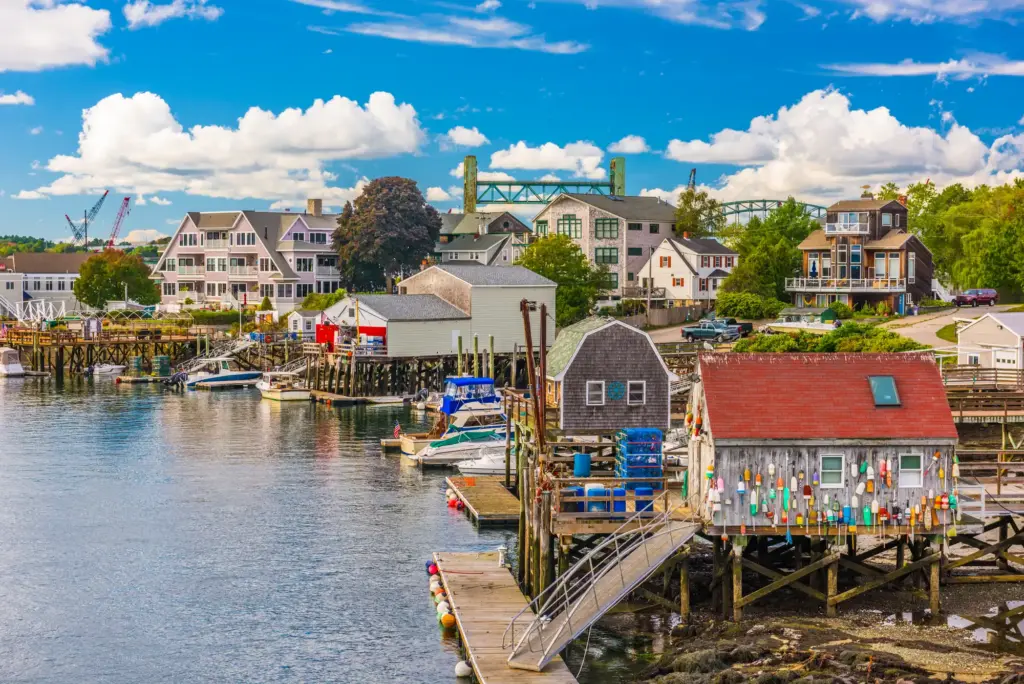
Portsmouth is a working harbor and a boating town, with lobster boats, sailboats, center consoles and yachts sharing the Piscataqua River. Plenty of Portsmouth households also keep a trailered boat for Great Bay or the lakes, or a personal watercraft in the garage. Boat insurance in Portsmouth, NH has to fit that mix: tidal water, a short season, a long winter on the hard, and a lot of other boats nearby.
Portsmouth Atlantic Insurance is a family-owned independent agency founded in 2005 and licensed in 10 states. We are New Hampshire’s highest-rated agency on Google, with 1,000+ Google reviews and over 2,000 testimonials, and we charge no fees. Our Portsmouth, NH office is at 601 Islington St, Unit 206. For an overview of boat and watercraft coverage, see our boat insurance page; for every line we write in town, see our Portsmouth, NH insurance agency page. This page focuses on insuring a boat kept or used on the Seacoast.
Why is boat insurance in Portsmouth, NH different from inland boating?
A few local conditions drive most of the questions carriers ask about a Seacoast boat:
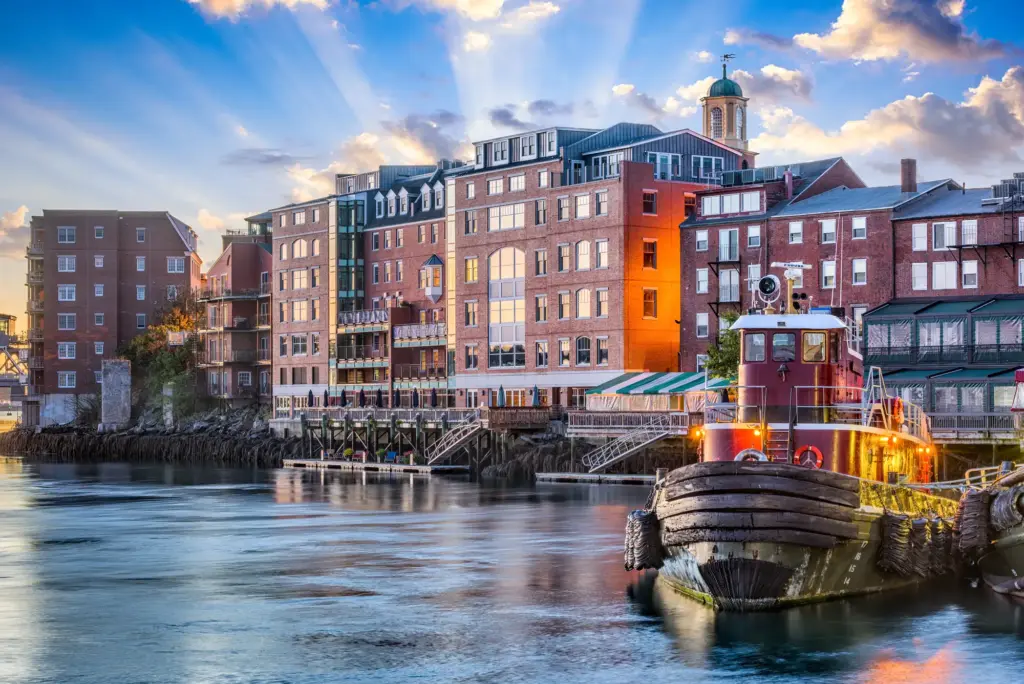
- Tidal current. The Piscataqua River is known for strong tidal currents around Portsmouth Harbor (NOAA tide and current data). Carriers want to know your experience and how the boat is handled and secured.
- Moorings and slips. A boat on a harbor mooring, in a marina slip in Portsmouth or New Castle, or across the river on the Kittery side faces different storm, theft and collision exposures. If you run a dinghy or inflatable tender out to the mooring, see inflatable boat, RIB and dinghy insurance.
- Salt water and open ocean. Boats that run outside the harbor toward the Isles of Shoals or along the coast to Rye Harbor and Hampton Harbor may need a broader navigation area than a boat that stays inside.
- A short season. Many Seacoast boats are in the water only part of the year. How long the boat is in the water, and where it spends the winter, both factor into the policy.
What does a boat insurance policy cover?
Boat and yacht policies are built in parts. The Insurance Information Institute notes that a homeowners policy may give limited property coverage to small boats but usually no liability, and that larger boats and personal watercraft need their own policy (Triple-I: boat insurance and safety). A typical boat policy includes some or all of the following:
- Hull (physical damage). Covers the boat, motor and permanently attached equipment for collision, sinking, fire, theft, storm and other covered causes, subject to a deductible.
- Liability. Pays for injury to others or damage to other boats, docks and property when you are responsible. This is the coverage marinas and lenders care most about.
- Medical payments. Helps with medical bills for people injured aboard, regardless of fault.
- Uninsured boater. Helps when you or your passengers are hurt by another boat operator who has little or no insurance.
- Fuel spill and wreck removal. Cleanup after a fuel spill, or raising and removing a sunken boat, can be expensive. Policies handle these differently.
- Towing and on-water assistance. Covers a tow, a jump start or fuel delivery when you are stuck on the water, often as an optional add-on.
- Personal effects and gear. Fishing tackle, electronics, water toys and clothing aboard may be covered up to a sub-limit.
- Trailer. Trailers can be covered on the boat policy, but the trailer limit often must be listed separately.
Should I choose agreed value or actual cash value?
- Agreed value. You and the carrier set the boat’s value when the policy starts. After a covered total loss, that is the amount paid, less any deductible.
- Actual cash value. The carrier pays what the boat was worth just before the loss, which means depreciation is subtracted.
Partial losses can be settled differently too: some carriers depreciate older engines, sails and canvas even on an agreed-value policy.
How do haul-out, winter storage and lay-up periods work?
On the New Hampshire Seacoast, most boats come out of the water in the fall and spend the winter on the hard, in a yard, under shrink-wrap or inside a storage building. Many policies include a lay-up period: a stretch of months when the boat is expected to be out of the water and not in use.
- Know your lay-up dates. If you launch early or haul late, check whether the policy still covers on-water use.
- Storage location matters. Carriers may ask whether the boat sits in a commercial yard, a marina building or your driveway.
- Ashore coverage. Most hull coverage continues while the boat is stored, but losses like snow-load damage, a stand failure or freeze damage to an engine that was not winterized can be treated differently by different policies.
Are named storms and Nor’easters covered for boats on the Seacoast?
Storm damage is generally a covered cause of loss on a boat policy, but the details matter on the coast. Late-season tropical storms and fall and winter Nor’easters can bring wind, surge and waves into Portsmouth Harbor and the smaller harbors along the coast.
- Named-storm deductibles. Some carriers apply a separate, higher deductible when a loss comes from a named storm.
- Moorings and docks. A boat that breaks loose from a mooring can damage other boats and docks, which is where liability comes in.
If your home is on the water too, our guide to coastal home insurance in New Hampshire covers the house side of storm and flood questions, and our Portsmouth homeowners insurance page covers the home itself.
What are navigation limits, and where can I take my boat?
Every boat policy defines a navigation area: the waters where coverage applies. A policy written for New Hampshire inland lakes may not cover a run out of Portsmouth Harbor, and a policy written for coastal waters may limit how far offshore you go. If you plan a longer coastal trip, or split time between the Seacoast and the lakes, tell us so the navigation area matches.
What about trailered boats, lake boats and personal watercraft?
Plenty of Portsmouth boat owners do not keep a slip at all. They launch at Great Bay, Rye Harbor or Hampton Harbor, or tow to Winnipesaukee and other New Hampshire lakes. Your auto policy may extend some liability to the trailer while you tow, but the trailer itself usually needs physical damage coverage on the boat policy.
Jet skis and other personal watercraft are usually not covered by homeowners insurance and need their own policy (Triple-I: personal watercraft insurance). We can quote a jet ski with your boat, and for ATVs and other recreational vehicles, see our powersports insurance page.
New Hampshire also has a boating education law. According to the NH State Police Marine Patrol, everyone 16 or older who operates a motorboat over 25 horsepower on New Hampshire waters must have a boating education certificate (see RSA 270-D:10).
How should boat liability fit with marina contracts, lenders and an umbrella?
- Marina and yard contracts. Many marinas, mooring fields and storage yards require a minimum amount of liability, and some ask to be listed on your policy as an additional insured.
- Lenders. If you financed the boat, the lender will usually require hull coverage and to be listed as loss payee.
- Umbrella coordination. A personal umbrella can sit above your boat, home and auto liability, but many umbrellas require minimum underlying boat liability and may limit certain boats by length or horsepower. We check that the boat is scheduled correctly; see our umbrella insurance page.
Which boat insurance companies can we quote?
For boat and yacht coverage, Portsmouth Atlantic can quote through Progressive, Foremost Specialty, American Modern, Hanover and Chubb. Chubb focuses on higher-value boats and yachts, so we bring it in when the boat calls for that kind of coverage.
As an independent agency, we do not steer every boat to the same company. We compare options across these companies based on the boat itself, how and where you use it (a harbor mooring, a Great Bay slip, a trailer you tow to the lakes) and what you need from the policy, such as agreed value, the navigation area and liability limits. Each company has its own underwriting guidelines, policy forms and endorsements, so coverage details vary from one to the next. We walk you through the differences before you choose.
Why use an independent agent for Seacoast boat insurance?
We do not work for one insurance company. We work with 40+ carriers overall, compare the boat companies above for your boat, explain the differences between agreed value and actual cash value, lay-up terms, navigation areas and storm deductibles in plain language, and coordinate the boat policy with your home, auto and umbrella. We work with boat owners in Portsmouth, New Castle, Rye, and across the Seacoast and New Hampshire by phone, email and online.
To quote a boat, it helps to have:
- Year, make, model, length and hull type, plus engine type, horsepower and year
- Where the boat is kept (mooring, slip, trailer, lift) and where it spends the winter
- Where you plan to use it (harbor, coast, Great Bay, lakes) and the months it is in the water
- Operators, boating experience and any boating education certificate
Get a Portsmouth boat insurance quote
Tell us about the boat and how you use it, and we will compare carriers. Prefer to talk? Call (603) 431-4020 or visit our Portsmouth, NH office at 601 Islington St, Unit 206.
Frequently asked questions
Does homeowners insurance cover my boat in Portsmouth, NH?
Usually only in a limited way. Many homeowners policies give small property limits for small boats such as canoes, kayaks or small sailboats and little or no liability. Most powerboats, sailboats, yachts and personal watercraft need a separate boat policy.
Is boat insurance required in New Hampshire?
Even when the law does not require it, marinas, mooring fields, storage yards and lenders often do. If you finance a boat or rent a slip, expect to show proof of liability and, for a loan, hull coverage.
What is the difference between agreed value and actual cash value?
Agreed value pays the amount you and the carrier set when the policy starts if the boat is a total loss. Actual cash value pays the boat’s depreciated value at the time of the loss, which is often lower.
Is my boat covered while it is hauled out for the winter?
Most boat policies continue hull coverage while the boat is stored ashore, but on-water use may be restricted during the lay-up period. Check the lay-up dates and how the policy handles storage, freeze and snow-load losses.
Can I use the same policy on the Piscataqua River and Lake Winnipesaukee?
Often yes, as long as the navigation area on the policy includes both coastal and inland waters. Tell us everywhere you plan to use the boat so the policy and the trailer coverage match.
Do I need a boating education certificate in New Hampshire?
According to the NH State Police Marine Patrol, everyone 16 or older who operates a motorboat over 25 horsepower on New Hampshire waters must have a boating education certificate.
Do I need separate insurance for a jet ski?
Usually yes. Personal watercraft are generally not covered by homeowners insurance and need their own policy. We can quote them with your boat or other recreational vehicles.
What companies does Portsmouth Atlantic use for boat insurance?
We can quote boat insurance through Progressive, Foremost Specialty, American Modern, Hanover and Chubb, with Chubb for higher-value boats and yachts. As an independent agency, we compare options across them based on your boat, how and where you use it, and your needs.
Do you charge fees for boat insurance?
No. We do not charge fees.
Sources
- Insurance Information Institute (Triple-I): Boat insurance and safety
- Insurance Information Institute (Triple-I): Personal watercraft insurance and safety
- NH State Police Marine Patrol: Boating Education
- New Hampshire RSA 270-D:10, Certificate Required
- NOAA Tides & Currents
This page is general information about boat insurance in Portsmouth, NH and is not a coverage guarantee. Coverage, navigation areas, lay-up periods and deductibles depend on the policy wording, endorsements and underwriting of each carrier. Boating rules can change; check with NH Marine Patrol for current requirements. Call (603) 431-4020 with questions about a specific boat.