
Home · NH
By Jon Merwin, Founder and CEO, Licensed Insurance Advisor
Published: [SET AT PUBLISH] · Updated: October 28, 2026
- Most NH homeowners policies cover water damage from a sudden, accidental burst pipe.
- That coverage often depends on keeping the house heated or shutting off and draining the water, according to the NH Insurance Department.
- Seacoast towns average about 27 to 29 nights at or below freezing in December and January (NOAA climate normals).
- Leaving for Florida? Read your policy’s vacancy wording and talk to your agent before you lock the door.
You’re in Naples for January. A nor’easter knocks out power back home in Rye for a day and a half, the furnace quits, and a supply line in the outside wall of the kitchen splits. Is that covered? Usually, yes: most New Hampshire homeowners policies pay for water damage from a sudden and accidental burst pipe. The catch is a condition many owners have never read. Your policy likely expects you to keep the house heated, or to shut off and drain the water, and how you handled that can decide the claim. Here’s how it works, as of October 28, 2026.
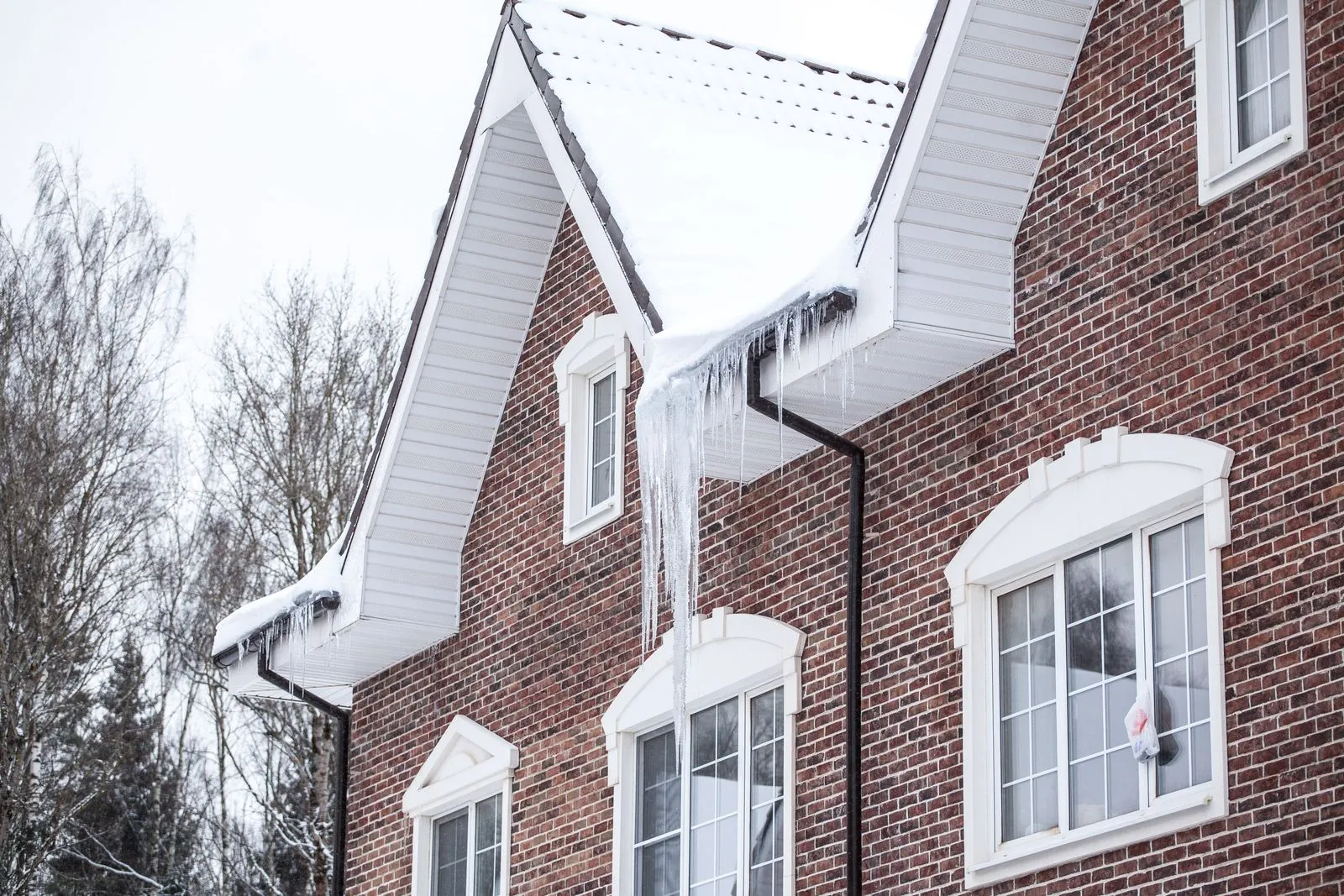
Does homeowners insurance cover frozen pipes in New Hampshire?
In most cases it covers the water damage from a pipe that freezes and bursts. The New Hampshire Insurance Department put it plainly in its December 2024 frozen-pipe advisory: most policies cover water damage from a “sudden and accidental” burst pipe, but that coverage often depends on the homeowner taking reasonable precautions. Insurers may require you to keep a minimum temperature in the home or to shut off the water supply when the property is vacant, and the Department warns that skipping those steps could lead to a denied claim.
What is the “heat condition” in a homeowners policy?
It’s our shorthand for the part of a policy that deals with freezing. Wording varies by carrier, but many policies limit or exclude freeze damage to plumbing, heating and sprinkler systems unless you used reasonable care to do one of two things:
- Keep heat in the building, sometimes at a stated minimum temperature, or
- Shut off the water supply and drain the system, including pipes and appliances that hold water.
If the furnace was running and a pipe in an exterior wall froze during a hard cold snap anyway, that’s the classic covered claim. If the house sat unheated for weeks with the water on, expect hard questions. Most cases land somewhere in between, which is why it pays to know your own wording before winter, not after.
Covered, not covered, and worth asking about
| Situation | How policies often treat it | What to ask your agent |
|---|---|---|
| Pipe bursts during a cold snap while the heat is on | Water damage generally covered, minus your deductible | Does my policy pay to open and repair walls to reach the break? |
| Power outage shuts off the heat and a pipe freezes | Often reviewed under the reasonable-care wording | What does my carrier expect if the power is out while I’m away? |
| House left unheated with the water on | Freeze damage may be excluded | Is my house considered vacant or unoccupied while I’m gone? |
| Slow drip that rots a subfloor over weeks | Often excluded or limited as gradual damage | Would a leak sensor or water shutoff device help with my carrier? |
| Mold after a burst pipe | Frequently limited or capped | Is there a mold limit on my policy, and how much is it? |
For the prevention side of water damage year-round, including appliance hoses and water heaters, see our older guide on preventing water damage to your home.
How often does it actually freeze on the Seacoast?
More often than people from away expect, and the coast is only a little milder than Concord. NOAA’s 1991–2020 climate normals for the Greenland station, just west of Portsmouth, show an average of 27 nights at or below 32°F in December, 29 in January and 26 in February. Concord runs a night or two colder each of those months and gets started earlier, averaging 11 freezing nights in October to Greenland’s 6.
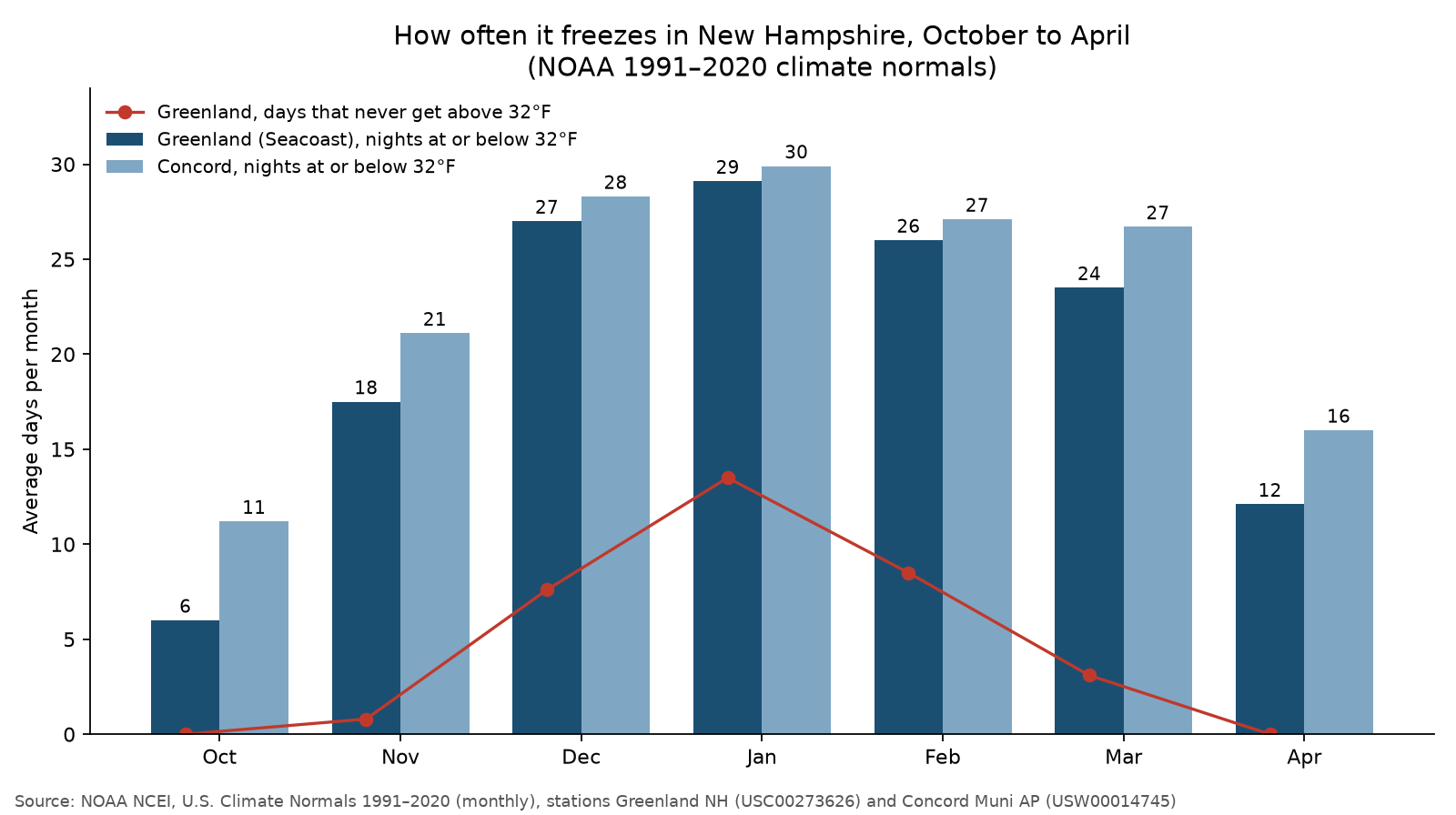
The number that worries plumbers is the red line: days when it never gets above freezing at all. Greenland averages about 13 of those in January and Concord about 17. A string of them, with wind off the water, is when pipes along a north wall or over a crawl space give out. Older Portsmouth and New Castle houses with fieldstone foundations are especially prone to it.

[QUOTE NEEDED FROM Jon Merwin]
Heading south for the winter? Do this before you leave
Snowbird homes are where frozen-pipe claims get complicated, because nobody’s there to notice the furnace quit. Many policies also have vacancy or unoccupancy wording that changes coverage once a home sits empty long enough. Our post on whether homeowners insurance covers a vacant property explains the difference between the two terms. Then work through this list:
- Call your agent first. Say how long you’ll be gone and ask what your policy expects for heat, water and house checks.
- Pick heat or drain, and know which you chose. Either keep the heat on at a temperature your policy accepts, or have a plumber shut off the main and drain the lines, water heater and fixtures. Some owners do both.
- Keep the fuel coming. On oil or propane? Get on automatic delivery so the tank doesn’t run dry in February.
- Add an alert. A low-temperature or Wi-Fi leak sensor, or an automatic water shutoff valve, can tell you about trouble in hours instead of weeks.
- Line up a house checker. A neighbor or property manager who walks through on a regular schedule, especially after storms and outages. Ask your carrier how often they expect it.
- Do the outside work. Disconnect hoses, shut and drain outdoor spigots, and winterize irrigation, as both the NHID and the NAIC recommend.
- Insulate the weak spots. Pipes in attics, crawl spaces and exterior walls. If you’re home all winter, drip faucets and open sink cabinets during deep freezes.
- Keep a record. Photos of the thermostat setting, plumber invoices and a log of house checks help if you ever file a claim.
Prevention steps summarized from the NH Insurance Department advisory and the NAIC winter weather consumer insight, checked October 28, 2026.
One more thing for snowbirds: Portsmouth Atlantic Insurance is licensed in Florida as well as New Hampshire, so if you own a place down south, we can look at both homes together.
What should I do if a pipe bursts?
- Shut off the main water valve right away. Know where it is before you need it.
- Turn off electricity to wet areas if it’s safe to reach the panel.
- Take photos of the damage before cleanup starts.
- Stop the damage from spreading. Call a plumber and a water mitigation company, and keep every receipt. Policies generally expect you to take reasonable steps to protect the property after a loss.
- Call your agent or carrier to report the claim, and don’t throw out damaged items until the adjuster says it’s OK.
Wondering what happens next? Our step-by-step look at how long a home insurance claim takes walks through inspections, estimates and payment.
What should I ask my agent before the first hard freeze?
- What does my policy say about freezing, and is there a minimum temperature?
- When would my home count as vacant or unoccupied, and what changes if it does?
- Does my carrier offer anything for leak sensors or automatic water shutoff devices?
- Is there a separate limit for mold or water backup?
We’re an independent agency, so if your current policy doesn’t fit how you use the house in winter, we can compare options from 40+ carriers. Our New Hampshire homeowners insurance page explains how we shop it.
Frequently asked questions
Does homeowners insurance cover frozen pipes in New Hampshire?
Most New Hampshire homeowners policies cover water damage from a sudden and accidental burst pipe. The New Hampshire Insurance Department notes that this coverage often depends on the homeowner taking reasonable precautions, such as keeping the house heated or shutting off the water when the home is empty.
What temperature should I keep my house at when I’m away?
There isn’t one number that applies to every policy. Some carriers spell out a minimum temperature and others simply require reasonable care to keep the home heated. Check your own policy wording or ask your agent, and set the thermostat with some margin, since a cold corner of a basement or an exterior wall runs colder than the hallway thermostat.
Is the pipe itself covered, or just the water damage?
Policies differ. Many pay for the water damage to floors, walls and belongings, plus the cost of tearing out and replacing finishes to reach the break, while treating the failed section of pipe more narrowly. Ask your agent how your policy handles the pipe, the tear-out and the cleanup.
Do I need to tell my insurance company if I go to Florida for the winter?
It’s a good idea. Many homeowners policies have vacancy or unoccupancy wording that can limit coverage when a home sits empty for an extended stretch. Tell your agent how long you’ll be gone and what your plan is for heat, water and house checks before you leave.
Does homeowners insurance cover a slow leak from a frozen pipe?
Slow, repeated leaks and damage that builds up over weeks are often excluded or limited, because policies are written around sudden and accidental losses. That’s one reason a leak sensor or a regular house check matters when you’re away.
Sources
- New Hampshire Insurance Department, “New Hampshire Insurance Department Releases Consumer Guidance on Preventing Frozen Pipes and Understanding Related Insurance Coverage” (Dec. 30, 2024)
- National Association of Insurance Commissioners, “Protect Your Home from Damaging Winter Weather” (Jan. 24, 2022)
- NOAA National Centers for Environmental Information, “U.S. Climate Normals” (1991–2020 monthly normals, Greenland, NH and Concord Municipal Airport stations)
Reviewed by Jon Merwin, Founder and CEO, Licensed Insurance Advisor.
Portsmouth Atlantic Insurance has 1,000+ Google reviews and over 2,000 testimonials.
Related guides: Is Vacant Home Insurance Worth It for Short-Term Vacancies? · Which Insurance Companies Handle Snow and Ice Damage Best in the Northeast? · How Long Does a Home Insurance Claim Take?
Next step: see our New Hampshire homeowners insurance options.