Home · NH
By Jon Merwin, Founder and CEO, Licensed Insurance Advisor
Published: [SET AT PUBLISH] · Updated: October 23, 2026
- About 1 in 17 New Hampshire homes heats mainly with wood, roughly four times the national share, and far more in the North Country (Census, ACS 2024).
- Your insurer will want to know about any wood or pellet stove. Disclose it before you install it.
- Sudden chimney fire damage is generally treated like other fire damage. Creosote buildup and worn liners are maintenance.
- The State Fire Marshal says chimney fires were more than half of NH heating fires from 2017 to 2021. An annual inspection is the single best habit.
It’s the first raw week of the season and the stove is going again. Before you load it up, here’s the short answer to the insurance question: yes, you can heat with a wood or pellet stove and keep a standard New Hampshire homeowners policy, but your carrier expects to be told about it, expects it to be installed properly, and expects the chimney to be maintained. Get those three right and a chimney fire is usually handled like any other fire claim. Here’s what that looks like in practice, as of October 23, 2026.
How many New Hampshire homes heat with wood?
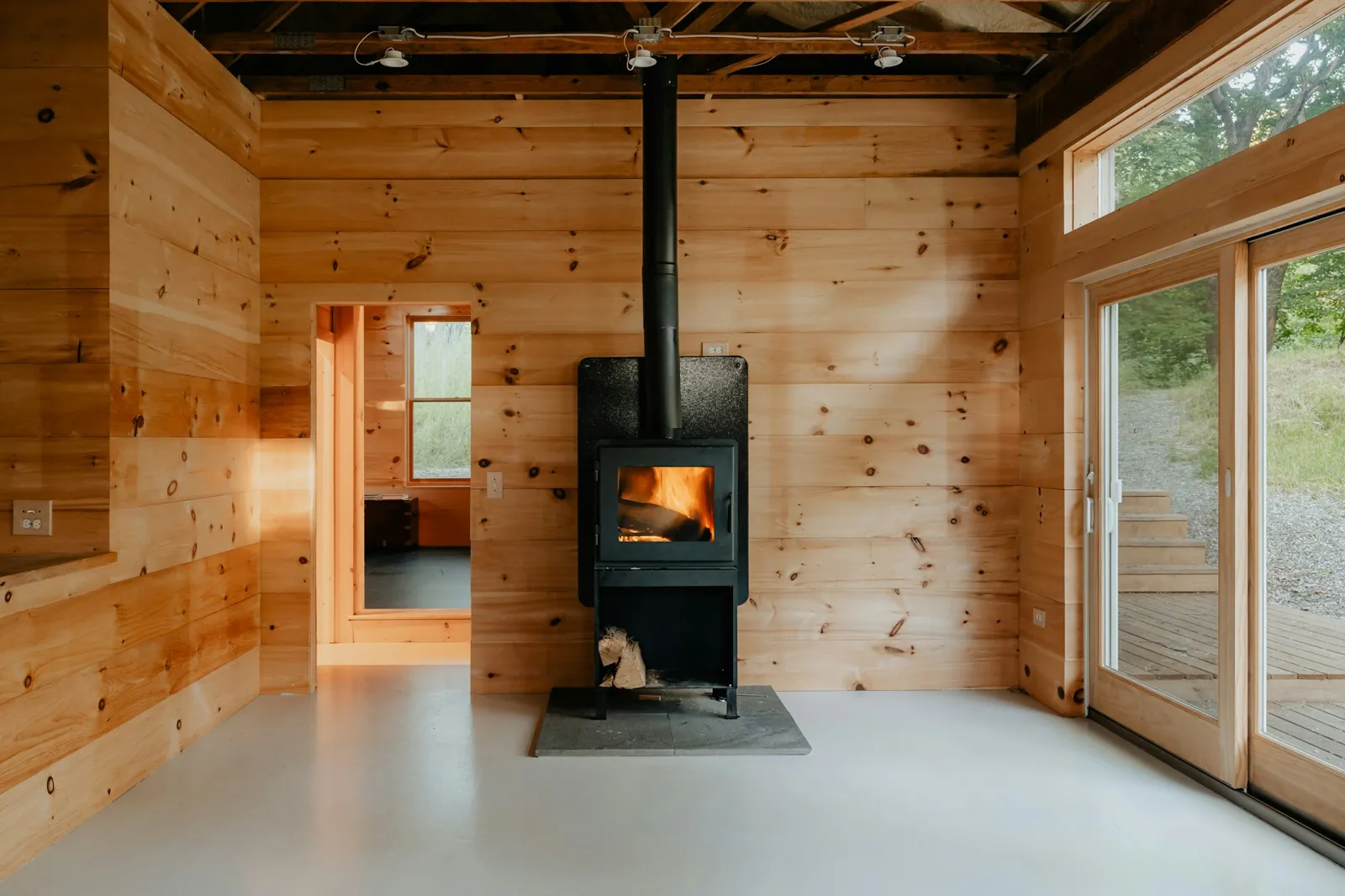
More than most people outside New England would guess. The Census Bureau’s American Community Survey counts 32,089 New Hampshire homes that use wood as their main heating fuel, about 5.8% of occupied homes. Nationally it’s 1.4%. That figure doesn’t include the many houses that run oil or propane and burn wood on the side, so the real number of stoves in use is higher.
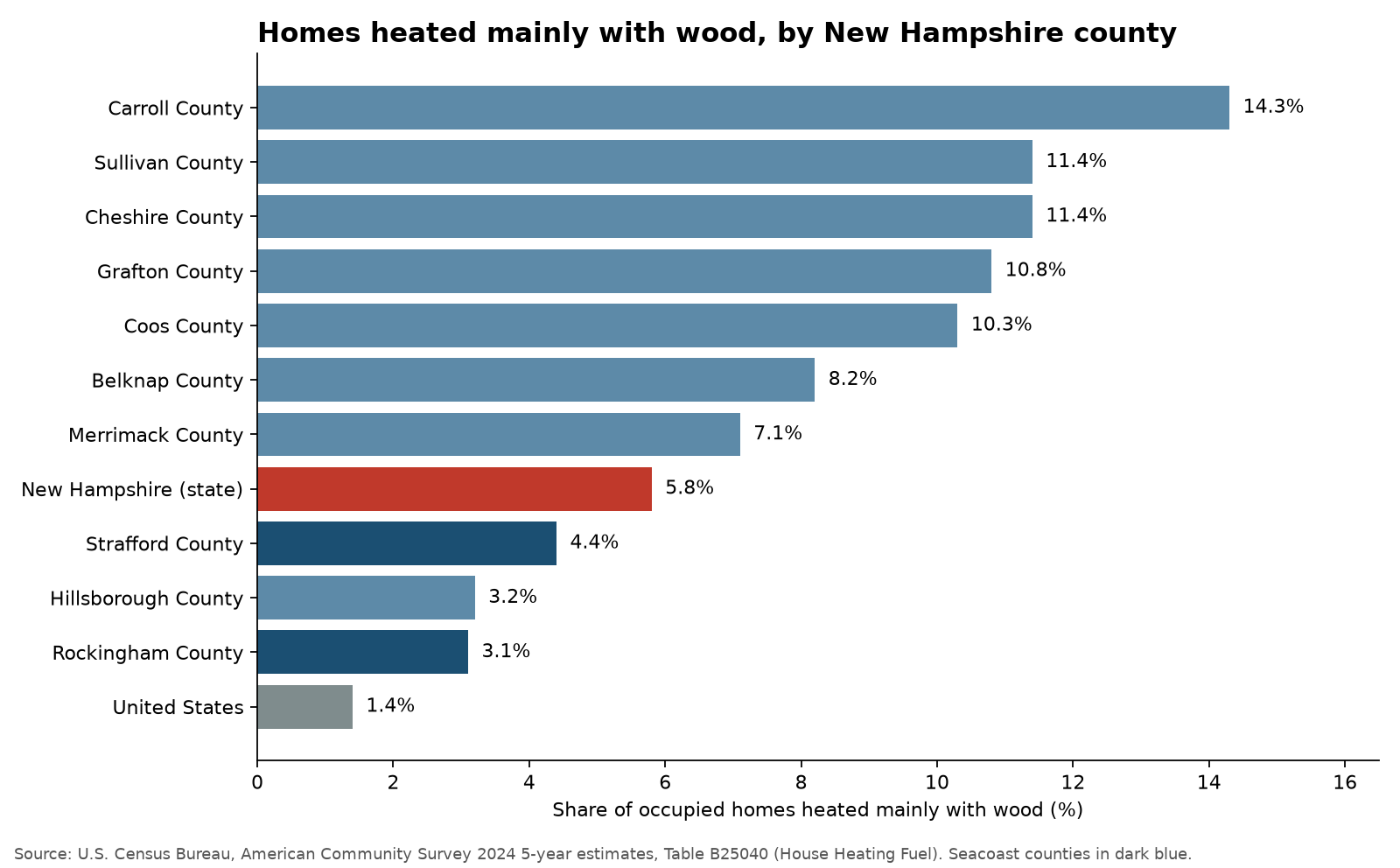
Carroll County leads at 14.3%, followed by Cheshire and Sullivan (11.4% each), Grafton (10.8%) and Coos (10.3%). Down on the Seacoast it’s lower, with Strafford at 4.4% and Rockingham at 3.1%, though you’ll still see cordwood stacked under tarps all over Barrington, Lee and Nottingham.
Do I have to tell my insurance company about a wood stove?
Yes. Most carriers ask about solid-fuel heating on the application, and the answer can affect which policies are available and how they’re priced. The questions tend to be practical:
- Is it a wood stove, pellet stove, fireplace insert or open fireplace?
- Is it the primary heat source or supplemental?
- Was it professionally installed, and does it carry a testing-lab listing?
- How does it vent, and what’s the condition of the chimney or liner?
- Where is it located, and is there a proper hearth pad and clearance to anything that burns?
If you’re adding a stove to a house you already insure, call your agent first. A stove that shows up later, at an inspection or after a claim, is a much harder conversation. Older homes add a layer: an 1800s center-chimney Cape in Portsmouth or Durham may have an unlined flue, and our guide to historic home insurance in Portsmouth covers what carriers look at on those houses.
What does the State Fire Marshal recommend?
The NH State Fire Marshal’s Office says heating has been a top cause of home fires in the state for the last ten years, with an average of about 450 heating fires a year. It also reported more than 1,300 chimney fires in New Hampshire from 2017 to 2021, over half of all heating fires in that period. Its winter heating safety guidance boils down to a few habits:
- Inspect and clean every year. Have the stove, chimney and vents cleaned and inspected by a qualified professional before heating season. Keep the receipt.
- Professional install. Stationary heating equipment should be installed by a qualified professional to local codes and the manufacturer’s instructions. Ask your town building department whether a permit is required.
- Three feet of clearance. Keep anything that can burn, and young kids, at least three feet from the stove.
- Burn hot and dry. Use clean, dry wood and run a hot fire, not a smoldering one, to limit creosote. The Fire Marshal cites about 1,100°F for complete burning.
- Handle ashes carefully. Let ashes cool, store them in a metal container, and keep the container a safe distance from the house.
- Alarms. Test smoke alarms monthly and make sure you have working carbon monoxide alarms.
Summarized from the NH State Fire Marshal’s Office winter heating release, checked October 23, 2026.
This isn’t new advice. After a deadly January 2018 cold snap, NHPR reported state fire officials urging residents to keep chimneys and vents clear (New Hampshire Public Radio, “State Fire Marshal Urges Safety After Winter House Fires,” January 9, 2018).

[QUOTE NEEDED FROM Jon Merwin]
Does homeowners insurance cover a chimney fire?
Generally, yes, when the damage is sudden. Fire is one of the core perils on a standard homeowners policy, so a chimney fire that cracks a flue, scorches framing or sends smoke through the house is usually handled like other fire damage, minus your deductible. Our post on whether home insurance covers fire goes through the basics.
Where it gets murky is the line between damage and upkeep. Insurers pay for what the fire damaged. They don’t usually pay to fix what was already worn out. The New Hampshire Insurance Department makes the same point about roofs: the company pays to repair the part damaged by a covered peril, and replacement needed because of normal wear and tear is on the owner. Chimneys work the same way.
| Situation | Usually treated as | What to ask your agent |
|---|---|---|
| Chimney fire damages the flue, framing or roof | Fire damage, subject to deductible and policy terms | Is my dwelling limit high enough to rebuild a masonry chimney? |
| Smoke and soot spread through the house | Often part of the fire claim | Are my contents on replacement cost or actual cash value? |
| Creosote cleaning, worn liner, crumbling mortar | Maintenance, not a claim | Will the carrier want an inspection report? |
| Fire forces you out while repairs happen | Additional living expense, within limits | How long and how much does my loss-of-use coverage pay? |
| Undisclosed stove found after a loss | Can complicate the claim | Is every stove and insert listed on my policy? |
Smoke, soot and a place to stay
A short chimney fire can still leave soot in every room. Contents coverage and additional living expense, sometimes called loss of use, matter here. The NHID notes that most policies pay extra costs to keep your normal standard of living while you can’t live at home, generally within time or dollar limits. If you’re wondering how the process runs, see how long a home insurance claim takes.
What can slow a claim down
- A stove the carrier never knew about
- No record of the stove or chimney ever being inspected
- A do-it-yourself install with no permit where the town requires one
- Damage that’s clearly from long-term deterioration rather than the fire itself
What should I ask my agent before heating season?
- Is my wood or pellet stove listed correctly on my policy, including whether it’s primary or supplemental heat?
- Does my carrier want an inspection report or photos of the install?
- Is my dwelling coverage set to what it would cost to rebuild today, chimney included?
- Do I have replacement cost on my belongings, or actual cash value?
- If I switch from oil to wood or pellets as my main heat, does anything change?
We’re independent, so if one carrier isn’t a fit for a house with a stove, we look at others. Our New Hampshire homeowners insurance page explains how we shop it.
Frequently asked questions
Do I have to tell my insurance company I have a wood stove?
Yes, you should. Most carriers ask about wood and pellet stoves on the application, and many ask again when you add one. Leaving it off can create a problem at claim time. Tell your agent before the stove goes in, not after the first fire of the season.
Does homeowners insurance cover a chimney fire?
Fire is a standard covered peril on most New Hampshire homeowners policies, so sudden damage from a chimney fire is generally handled like other fire damage, subject to your deductible and policy terms. Routine cleaning, creosote removal and wear on an old liner are maintenance, not insurance claims.
Is a pellet stove treated differently from a wood stove?
Carriers usually ask about both, and the questions are similar: how it was installed, how it vents and how it’s maintained. Pellet stoves vent outside like other fuel-burning equipment. Ask your agent how your carrier classifies the unit you have.
How often should my chimney be inspected in New Hampshire?
The NH State Fire Marshal’s Office says chimneys and heating equipment should be cleaned and inspected every year by a qualified professional. Keep the receipt; it’s useful if a carrier asks or if you ever file a claim.
Will one chimney fire claim get my homeowners policy non-renewed?
Under RSA 417-B:3-a, as described by the New Hampshire Insurance Department, an insurer can’t non-renew a homeowners policy based solely on one valid claim in the current or previous policy term.
Sources
- NH State Fire Marshal’s Office, “Baby, It’s Cold Outside! Heat Your Home Safely This Winter” (Dec. 21, 2022)
- New Hampshire Insurance Department, “Homeowners and Renters Insurance”
- U.S. Census Bureau, American Community Survey 2024 5-year estimates, Table B25040 “House Heating Fuel”
- New Hampshire Public Radio, “State Fire Marshal Urges Safety After Winter House Fires” (Jan. 9, 2018)
Reviewed by Jon Merwin, Founder and CEO, Licensed Insurance Advisor.
Portsmouth Atlantic Insurance has 1,000+ Google reviews and over 2,000 testimonials.
Related guides: Does Home Insurance Cover Fire? · Historic Home Insurance in Portsmouth, NH · How Long Does a Home Insurance Claim Take?
Next step: see our New Hampshire homeowners insurance options.