
Storm damage can raise immediate and practical questions. One of the most common is whether homeowners insurance covers tree removal after a storm.
The answer is not automatic. Coverage depends on two structural factors: what caused the tree to fall and what the tree damaged.
If wind places a tree onto your roof in Portsmouth, removal is usually part of the repair claim. If that same tree falls into open lawn space in Bedford without damaging a structure, removal is typically your responsibility.
Before filing a claim, it’s often helpful to know this difference to avoid problems.
At a Glance
- If a storm damages your home or makes it hard to get to, it’s covered.
- Not covered for maintenance or falls that don’t hurt
- There are limits on how many trees and events can happen at a time.
- Deductibles decide if it’s worth it to file
- Claims against neighbors depend on the situation and carelessness.
Storm claims are not usually easy. It’s important to know about deductibles, sublimits, and the cause of loss.
Does Home Insurance Cover Tree Removal After a Storm?

In Portsmouth, Exeter, and Bedford, tree removal is generally covered when a covered peril causes property damage under a properly structured homeowners policy. It is not covered for routine maintenance or harmless falls.
Coverage typically applies when wind, lightning, or ice causes a tree to:
- Strike your home
- Damage a covered structure
- Block driveway access
If a healthy tree falls in Exeter during a windstorm but does not damage a structure, removal is usually considered homeowner responsibility.
For example, if a coastal storm moves through Portsmouth and places a tree onto your roof, removal is typically included as part of restoring the structure. If it lands in open yard space, coverage usually does not apply.
Most confusion surrounding homeowners insurance tree removal comes down to two questions:
What caused the fall?
What was damaged?
Seeing these clearly often resolves most uncertainty.
When Tree Removal Is Typically Covered
Tree removal is generally covered when the following conditions are present:
- The tree hits your home or garage
- A covered structure is damaged
- The tree blocks driveway access
- The fall was caused by a covered peril
In many cases, removal becomes part of restoring the structure. It is not treated as a separate maintenance expense.
It is important to remember that the storm itself must be a covered event. Windstorm tree damage homeowners insurance typically applies when the policy includes wind as a covered peril.
Knowing that difference before filing can save you trouble later.
When Tree Removal Is Not Covered
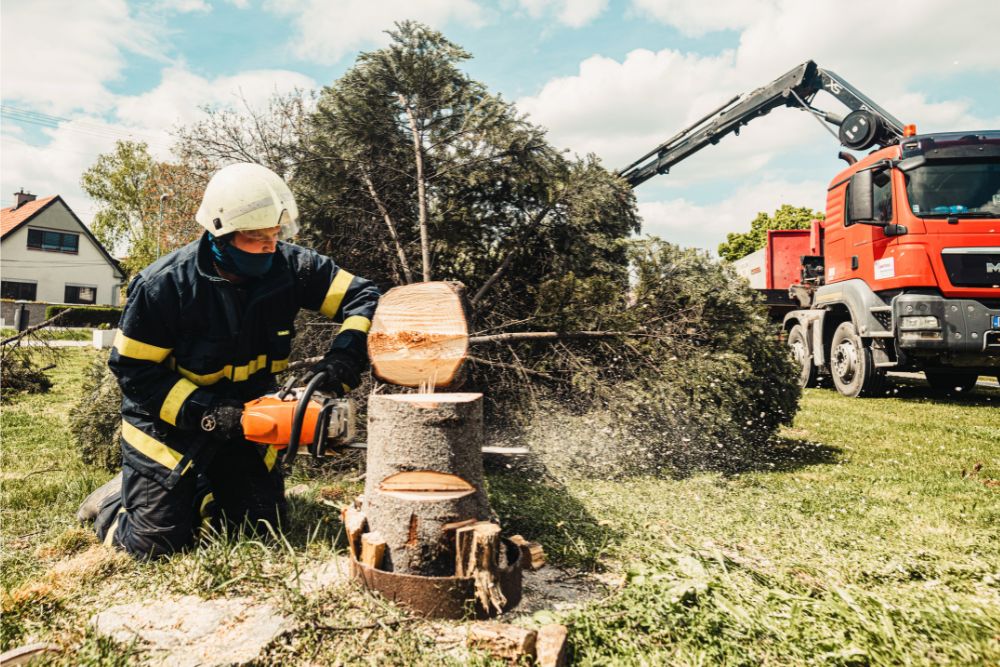
Tree removal is usually not covered in these situations:
- No structural damage occurred
- Removal is preventative, which is generally considered routine property maintenance rather than covered damage.
- The tree was rotting or neglected
If a tree falls in Bedford after years of visible decay and no damage occurs to a covered structure, removal is generally considered property upkeep.
Myth vs Fact
Myth: Insurance covers any fallen tree.
Fact: Coverage requires both a covered cause and property damage.
Many homeowners ask whether insurance covers tree removal with no damage. In most cases, it does not.
Recognizing this early helps avoid filing claims that are unlikely to qualify.
Understanding Coverage Limits and Sublimits

Even when tree removal is covered, payment is not unlimited.
Most policies include:
- A per-tree cap, often $500 to $1,000
- A per-event maximum
- A debris removal percentage limit
For example, if removal costs $2,000 and your policy caps at $1,000 per tree, you are responsible for the remaining amount.
Coastal exposure can also affect how deductibles are structured and how wind losses are evaluated.
Reviewing sublimits before storm season, particularly in wooded or coastal areas, can help ensure expectations match policy structure. Many homeowners only recognize these limitations after a loss.
Storm-related losses are not limited to fallen trees. Water backup and sewer issues often create separate coverage questions.
The Deductible Question Most Homeowners Miss
The deductible often determines whether filing a claim makes sense at all.
If removal costs less than your deductible, insurance will not pay.
| Removal Cost | Deductible | File Claim? |
| $900 | $1,500 | No |
| $3,500 | $1,000 | Likely Yes |
| $1,200 | $2,000 | No |
In New Hampshire, windstorm deductibles may be separate and higher than standard deductibles, particularly in coastal areas like Portsmouth.
Filing a small home insurance deductible storm damage claim can also affect future premiums. A modest payout today may carry longer-term cost implications.
Before filing, it is often worth reviewing how your deductible applies. A short conversation can provide clarity without initiating a claim.
What If the Tree Falls on a Neighbor’s Property?
In established neighborhoods in Exeter or Portsmouth, trees often sit close to property lines. When one falls, responsibility depends on cause and condition.
If a healthy tree falls during a storm, it is generally considered an act of nature. Each homeowner typically handles their own damage.
If negligence is present, liability coverage may apply.
For instance, if a tree that is clearly rotting falls on a neighbor’s shed and there was already damage, liability coverage might kick in.
It’s important to have records. Photographs and maintenance logs can affect how responsibility is decided.
When neighbors know what the rules are, they often don’t fight with each other.
What to Do After a Storm

Taking careful steps can keep both your claim and your property safe.
- Before you take it away, take pictures.
- Stop more damage safely
- Check your deductible
- Check the limits of your coverage
- Talk to your agent before you file.
As with auto claims, the steps you take immediately after a loss can influence how smoothly the process unfolds. Taking your time helps you avoid expensive mistakes.
Before filing a claim, many homeowners find it helpful to go over the details of their coverage. Making decisions is often easier when you know what you want early on.
When to Review Your Coverage
Storm events often reveal structural gaps in coverage.
If you live in coastal Portsmouth, wooded areas of Exeter, or neighborhoods in Bedford with mature trees, annual reviews are prudent. Mature landscaping increases potential exposure.
A policy that was adequate several years ago may not reflect current rebuilding costs or deductible structures.
For many homeowners, periodic insurance reviews become part of responsible property stewardship rather than a reaction to loss.
Storm coverage can feel complicated. A careful review often brings reassurance and clarity.
FAQs
Does homeowners insurance cover tree removal after a storm?
Yes, when a covered peril causes the tree to damage your home or block access. Removal is not covered when no property damage occurs.
Does insurance cover tree removal if no damage occurs?
No. If the tree falls without damaging a covered structure or blocking access, removal is typically considered homeowner responsibility.
Are there limits on how much insurance pays?
Yes. Most policies include per-tree and per-event caps, commonly between $500 and $1,000 per tree.
Is windstorm damage treated differently?
Often, yes. Windstorm damage may trigger a separate deductible that is higher than your standard deductible.
Who pays if my tree falls on my neighbor’s house?
If the tree was healthy and fell during a storm, your neighbor generally uses their own policy. If negligence is proven, your liability coverage may apply.
Does insurance cover any tree that falls in a storm?
No. Coverage applies only when a covered peril causes property damage.
Should I file a claim for minor removal costs?
Not necessarily. If costs fall below your deductible, filing provides no benefit and may affect premiums.
Does insurance cover preventative tree removal?
No. Preventative removal is considered maintenance. Insurance covers sudden and accidental damage.