At a Glance
If you’re short on time, here’s what to know:
- Higher repair and rebuilding costs, severe weather and rising claim costs have pushed home and auto premiums up in recent years. Understanding why your homeowners insurance is so high explains more of what is behind today’s prices.
- Even if your home wasn’t damaged, widespread losses can influence insurance pricing. Learn more about how claims affect insurance premiums and why rates may increase after major loss events.
- Your premium can increase even if you haven’t filed a claim because insurers also consider broader market trends and regional claim costs.
- Reviewing your coverage regularly can help ensure your policy still fits your home, vehicle, and budget.
- Working with an independent insurance agency allows you to compare coverage from multiple carriers rather than relying on a single insurance company.
Higher claim costs, severe weather, and rising repair and rebuilding expenses have pushed home and auto premiums up over the past few years. Auto insurance prices have started to cool in 2026, but both still cost far more than they did a few years ago.
Insurance rates are based on what an insurer expects it will cost to make you whole after a covered loss, whether that’s repairing a roof after a windstorm or replacing a vehicle after an accident. As you’ve likely noticed, rebuilding homes, repairing vehicles, and even medical care all cost considerably more than they did just a few years ago.
Many homeowners also want to understand what’s causing these increases beyond inflation. Our guide on why your homeowners insurance is so high explores the biggest factors behind today’s premiums.
While these trends are affecting homeowners and drivers across the country, New Hampshire residents face some unique considerations. Nor’easters, heavy snow, coastal storms and rising local construction costs all shape what insurers expect future claims to cost.
A lot of people assume their premium only changes because of their own claims. Your record matters, but insurers also look at claim trends, weather losses, and repair and rebuilding costs across the region.
Table of Contents
What’s Driving Higher Home Insurance Costs?

Rebuilding a home today costs significantly more than it did just a few years ago. If you’ve hired a contractor or priced building materials recently, you’ve probably seen those higher costs firsthand. Increased material prices, labor shortages, and longer rebuilding timelines continue to make home insurance claims more expensive.
Homeowners premiums have climbed in recent years as the cost to rebuild has gone up. Although price increases have moderated in some areas, rebuilding a home remains considerably more expensive than it was before the pandemic.
Severe weather is also playing a larger role. Hurricanes, wildfires, hailstorms, flooding, and severe wind events continue to result in billions of dollars in insured losses every year. Here in New Hampshire, nor’easters, coastal storms, heavy snowfall, and wind damage all contribute to higher claim costs.
Even if you’ve never filed a homeowners insurance claim, your premium can still change. Insurance companies evaluate broader claim trends, not just individual policyholders. As rebuilding costs increase, premiums generally adjust to reflect the higher cost of settling claims.
A policy review can also help you confirm your homeowners insurance coverage still matches your home’s current replacement cost.
Why Auto Insurance Still Costs More Than It Used To
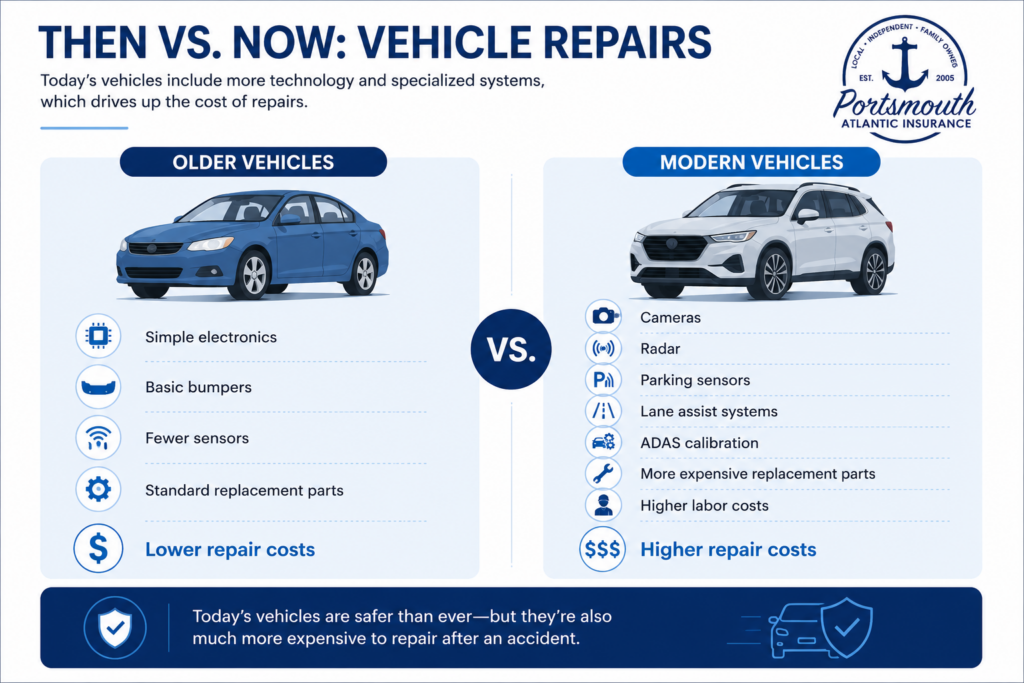
Vehicle repairs have become more expensive as today’s cars include advanced safety systems, cameras, sensors, and other technology that often require specialized parts and repairs. Even relatively minor accidents can result in much larger repair bills than they did a few years ago.
Although supply chains have improved compared to the height of the pandemic, repair costs remain elevated because of higher labor costs, more expensive replacement parts, and increasingly complex vehicles.
Medical expenses also continue to influence auto insurance premiums. As healthcare costs rise, insurers pay more to settle injury claims following an accident, contributing to higher overall claim costs.
According to the U.S. Bureau of Labor Statistics, motor vehicle insurance prices rose by double digits year over year through 2023 and 2024. The increases have since cooled, and by summer 2026 prices were running a few percent below a year earlier. Even so, auto insurance still costs far more than it did a few years ago.
New Hampshire Factors to Keep in Mind
Winter Weather and Coastal Storms
Heavy snow, ice dams, frozen pipes and nor’easters are part of life here, and they drive a lot of home claims across the state. Carriers look closely at homes in areas with more storm exposure, like the Seacoast, when they set rates and decide what they’ll write.
New Hampshire’s Auto Insurance Rules
New Hampshire doesn’t require most drivers to carry auto liability insurance, though drivers still have to meet the state’s financial responsibility rules after an accident. That makes uninsured and underinsured motorist coverage worth a close look at renewal. Think carefully before cutting it to save money.
Steps That Can Help at Renewal
- Lower your risk. Security systems, water leak sensors and keeping up with maintenance can help, and some carriers offer credits for them.
- Keep your credit in good shape. Some carriers use credit history when they price a policy.
- Ask about loyalty and bundling. Some carriers reward long-time customers, and combining home and auto often helps.
Why Did My Premium Go Up If I Didn’t File a Claim?
This is one of the questions we hear most often.
Insurance pricing isn’t based solely on your personal claims history. Even homeowners with a clean claims history can be affected by broader market conditions, such as rebuilding expenses, vehicle repair costs, severe weather losses and medical inflation. People in the industry call this a “hard market.”
If those costs increase, premiums may rise even for policyholders with clean driving records and no recent claims.
A premium increase doesn’t necessarily mean you’re paying too much. It may simply be a good opportunity to review whether your policy still fits your needs.
What You Can Do if Your Premium Increases
While you can’t control inflation or severe weather, there are several ways to help manage your insurance costs. If you’re looking for practical ways to reduce your premium without sacrificing important protection, our guide on how to lower your home insurance offers additional ideas to consider.
- Review your home and auto coverage every year or two.
- Ask about bundling your home and auto insurance.
- Consider whether your deductible still fits your financial situation.
- Make sure you’re receiving every discount you qualify for.
- Update your policy after renovations, home improvements, or major purchases.
If you’re comparing policies, remember that price is only one part of the decision. Coverage limits, deductibles, endorsements, and claims service can vary from one carrier to another. Working with an independent insurance agency gives you the opportunity to compare multiple carriers and choose coverage that fits your needs instead of relying on a single insurance company.
Focus on Value as You Explore Ways to Save
It’s natural to look for ways to lower your insurance costs, but the lowest premium isn’t always the best value.
Two policies with similar premiums can provide very different levels of protection when a claim occurs. Looking beyond price can help you avoid unexpected coverage gaps when you need your insurance most.
If your premium has increased recently, it may be a good time to review your coverage rather than assume your current policy is still the best fit. A policy review may also uncover discounts or identify opportunities to improve your coverage.
Before Your Next Renewal
A higher premium doesn’t automatically mean you need to switch insurance companies. In many cases, it reflects broader changes in the insurance market rather than anything about your own policy. If you’re purchasing a home or recently refinanced, it’s also worth understanding the difference between mortgage insurance and homeowners insurance.
The better question to ask is:
“Does my current policy still provide the right protection for what I’m paying?”
Before your next renewal, take a few minutes to review your policy and consider:
- Has my home’s rebuilding cost changed?
- Have I renovated my home or purchased anything valuable since my last review?
- Does my deductible still make sense for my budget?
- Am I receiving every discount I qualify for?
- Would comparing coverage from multiple insurance carriers give me a better understanding of my options?
If you’re unsure about any of those questions, request a personalized insurance review to compare your current coverage and determine whether it still fits your needs. Sometimes you’ll confirm your current coverage is still the right fit. Other times, you may discover opportunities to improve your protection or reduce your premium without sacrificing important coverage.
At Portsmouth Atlantic Insurance, we work with multiple insurance carriers, giving homeowners and drivers the ability to compare options based on both coverage and value rather than relying on a single insurer.
We proudly serve residents throughout New Hampshire, Massachusetts, Vermont, Maine, Connecticut, Rhode Island, New York, Ohio, Illinois, and Florida.
Frequently Asked Questions
Why did my homeowners insurance go up if I never filed a claim?
Insurance premiums are based on more than your individual claims history. Rising rebuilding costs, severe weather losses, inflation, and regional claim trends can all affect your premium.
Why is my car insurance increasing even though I have a clean driving record?
Your premium reflects broader claim costs, including vehicle repairs, medical expenses, and regional accident trends, not just your personal driving history.
Will home insurance rates go down in 2026?
Some markets may see slower rate increases, but rebuilding costs, weather-related claims, and inflation continue to put upward pressure on homeowners insurance premiums.
Why is auto insurance still so expensive?
Modern vehicles are more expensive to repair because they include advanced technology such as cameras, sensors, and driver-assistance systems. Higher medical costs also contribute to larger insurance claims.
Can bundling home and auto insurance help lower my premium?
Many insurance companies offer discounts for bundling multiple policies. An independent insurance agency can help you compare available options.
Does my deductible affect my premium?
Generally, choosing a higher deductible can reduce your premium, but it also means you’ll pay more out of pocket if you file a claim.
How often should I review my insurance policy?
It’s a good idea to review your policy every year or two, or after major life events such as buying a home, renovating, purchasing a new vehicle, or making significant improvements.
Should I shop around before renewing my policy?
Comparing coverage periodically can help ensure your policy still provides the protection you need. An independent agency can simplify that process by comparing multiple carriers on your behalf.
Sources
- U.S. Bureau of Labor Statistics, CPI: Motor vehicle insurance (12-month percent change)
- U.S. Bureau of Labor Statistics, CPI: Medical care (12-month percent change)
- Insurance Information Institute, Facts + Statistics: U.S. catastrophes
- NAIC, Credit-Based Insurance Scores
- New Hampshire General Court, RSA Chapter 264: Accidents and Financial Responsibility