
High-valueNH
Reviewed by Jon Merwin, Founder and CEO, Portsmouth Atlantic Insurance · Published October 4, 2026
Key takeaways
- The premium on a $3 million home is driven mainly by what it would cost to rebuild it, not by its sale price.
- At this level, custom construction can push rebuild cost above market value, and a waterfront lot can push market value far above rebuild cost. Either gap causes problems if the dwelling limit is wrong.
- Guaranteed replacement cost pays to rebuild the home as it was, even above the limit. It is offered by a limited number of insurers. Extended replacement cost adds a set amount above the limit.
- Ordinance or law coverage pays toward code upgrades during a covered repair, which matters for older and historic New Hampshire homes.
- Update the dwelling limit after every renovation and at each renewal.
How much is insurance on a $3 million home in New Hampshire? The honest answer starts with a different number: what it would cost to rebuild the house. Carriers price a home of this size mainly on its replacement cost, plus its location, construction, protective devices, claims history and the coverage you choose. We don’t publish an average premium, because a single number would mislead more people than it helps. What we can do is explain what drives the cost and what to check before you buy.
This guide focuses on the question that matters most at $3 million: whether your dwelling limit and replacement terms would actually rebuild your home. For carriers, umbrella and flood basics, see our $2 million home guide.
What drives the cost to insure a $3 million home?
- Rebuild cost. Square footage, construction type and the quality of finishes. This is usually the largest factor.
- Location. Coastal and lakefront exposure, wind, snow load and the local fire protection rating.
- Age and systems. Roof, heating, wiring and plumbing age, and whether older systems have been updated.
- Protection. Monitored alarms, water-leak and low-temperature sensors, automatic water shutoff valves and generators.
- Coverage terms. Dwelling limit, replacement cost terms, ordinance or law, deductibles and liability limits.
Why can a $3 million home cost more to rebuild than it would sell for?
The NAIC explains that replacement cost is the amount it would take to rebuild or repair your home with materials of similar kind and quality, without deducting for depreciation. Market value is different: it includes the land and reflects what buyers will pay. Triple-I notes that the price you paid, or the current market price, may be more or less than the cost to rebuild.
In New Hampshire, we see the gap run both ways:
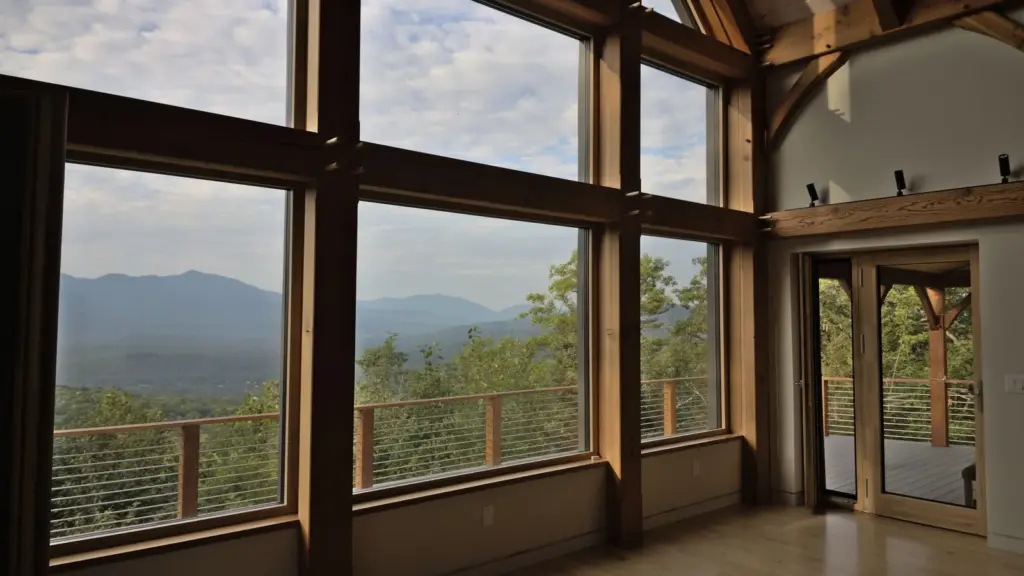
- Rebuild cost above market value. Timber-frame homes in the White Mountains and Lakes Region, shingle-style houses with custom millwork on the Seacoast, and historic Portsmouth homes with plaster walls, hand-cut trim and slate roofs can cost more to rebuild than a buyer would pay. Specialty trades, custom windows and long lead times all add cost.
- Market value above rebuild cost. A modest house on a prime waterfront lot in Rye or New Castle may sell for $3 million largely because of the land. Insuring it for the sale price would mean paying for coverage you can’t use, since land isn’t insured.
| Feature | Why it raises rebuild cost | What to tell the carrier |
|---|---|---|
| Timber frame or post-and-beam | Specialist framers and custom joinery | Frame type, species and who built it |
| Stone, slate or copper | Premium materials and skilled installers | Roof and exterior materials, age of roof |
| Custom millwork and cabinetry | Hand-built work can’t be bought off the shelf | Built-ins, paneling and kitchen details |
| Historic construction | Plaster, period trim and matching original materials | Year built, any historic district rules |
| Smart home and radiant systems | Specialized equipment and integration | Heating, generator, automation and security systems |
| Guest house, barn or garage | Separate structures need their own limits | Size and use of every outbuilding |
How is the rebuild cost of a high-value home estimated?
High-value carriers usually set the dwelling limit using a replacement cost estimate, and many send an appraiser to inspect the home in person. The estimate counts square footage, construction quality, materials and features room by room. Ask to see the estimate and check it against what you know about the house. If you have recent builder or architect figures, share them. The estimate is only as good as the information behind it.
Rebuild costs can also jump after a regional storm, when many homeowners need contractors and materials at the same time. That’s one reason the replacement cost terms below matter as much as the limit itself.
Extended vs guaranteed replacement cost: which do you need?
Triple-I describes guaranteed replacement cost as paying whatever it costs to rebuild your home as it was before the loss, and notes it is offered by a limited number of insurers. Extended replacement cost pays a set amount above the dwelling limit.
| Option | What it pays | Watch for |
|---|---|---|
| Replacement cost | Rebuild cost up to the dwelling limit | A limit set too low leaves you paying the difference |
| Extended replacement cost | The limit plus an added amount if rebuilding costs more | The size of the extra amount varies by policy |
| Guaranteed replacement cost | The cost to rebuild as it was, even above the limit | Availability is limited and conditions apply, such as keeping the limit current |
| Cash settlement option | A payout if you choose not to rebuild on the same lot | Ask whether the policy offers it and how it is calculated |
Why do rebuild costs on high-value homes keep rising?
Rebuild costs have kept climbing, and custom homes feel it most. Chubb, one of the private-client carriers we work with, reviews construction costs every year to help its clients’ dwelling limits keep pace. The pressures it points to match what we see on New Hampshire homes:
- Skilled labor. Labor is still the biggest strain on residential construction, and specialist trades are harder to book.
- Materials and codes. Common building materials keep rising, and stricter building, energy and fire codes add cost to every rebuild.
- One house at a time. Rebuilding a single custom home costs more than building many similar homes, because the builder loses economies of scale.
- Finishes that cost tables miss. Custom woodwork, cabinetry, smart-home and audio-visual systems aren’t fully captured in standard construction cost data.
- Upgrades nobody reported. Small improvements add up over the years and can leave a home underinsured.
That is the point Jon makes later in this guide: the goal posts have moved, so a dwelling limit set a few years ago may no longer rebuild the house.
What can a high-value home policy add?
Private-client policies often include features a standard homeowners form doesn’t, or offer them as options. Availability varies by state and policy. Ask which of these apply to your home:
- Extended replacement cost. Pays above the dwelling limit if rebuilding costs more than expected. Chubb’s Masterpiece policy builds this in, and Cincinnati offers an enhanced replacement cost option on its Capstone forms.
- A cash-out option. Lets you take a replacement cost settlement even if you decide not to rebuild on the same lot.
- An in-home appraisal. A carrier appraiser visits to estimate rebuild cost room by room.
- Annual construction cost adjustments. Some carriers adjust the dwelling limit at renewal to track construction costs. It helps, but it doesn’t replace telling us about renovations.
- Rebuilding to code. Broader coverage for the extra cost of meeting current building codes after a covered loss.
- Equipment breakdown. Optional coverage for the sudden breakdown of home systems such as heating and cooling, generators, well pumps, pool equipment and home automation. It is not meant for wear and tear.
- Service line coverage. Optional coverage for underground water, sewer, power and other lines that run to the house, including the cost to dig them up. Cincinnati offers it as an endorsement on its higher-tier homeowner policies.
Not sure your dwelling limit would rebuild your home?
Ask our Portsmouth team for a rebuild-cost review: (603) 431-4020.
Does ordinance or law coverage matter on a $3 million home?
Often, yes. Triple-I notes that standard policies generally won’t pay the extra cost of bringing a home up to current building codes after a covered loss without ordinance or law coverage. For an older or historic home, code upgrades to wiring, egress, energy efficiency or structure can be a large part of a rebuild. Ask how much ordinance or law coverage the policy includes, and whether it applies to the undamaged part of the home if a local code requires it to be rebuilt too.
What about other structures, landscaping and outdoor living?
A $3 million property often has more than one building: a detached garage, a guest house, a barn, a pool house or a boathouse. Check that each has a limit that matches its own rebuild cost. Stone walls, terraces, mature trees and outdoor kitchens may have their own limits too. Ask how the policy treats them.
Which carriers insure $3 million homes in New Hampshire?
As an independent agency comparing 40+ carriers, we work with Openly and National General for homes up to about $5 million. Cincinnati and Chubb both write homes at any dwelling limit, so we quote both. Each one has its own appetite for home value, age, construction and location, so the best fit for a timber-frame home in Franconia may not be the best fit for a shingle-style house in Rye. Read our guide to the best high-value home insurance companies.
Checklist: rebuild-cost review for a $3 million home
- Get the carrier’s replacement cost estimate and check it room by room.
- Share builder, architect or renovation figures if you have them.
- Ask whether guaranteed or extended replacement cost is available.
- Size ordinance or law coverage to the age of the home.
- Set separate limits for each outbuilding.
- Report every renovation or addition to your agent.
- Ask about cash-out, equipment breakdown and service line options.
- Review the limit at each renewal.
 Expert tip from Jon Merwin, Founder and CEO, Portsmouth Atlantic Insurance
“With the inflation of the past few years, the cost to replace a home keeps increasing. The goal posts have shifted: the dwelling coverage we’re seeing today is much higher than it was in the past. Carriers are adjusting with it and expanding their underwriting appetite for higher-value homes.”
— Jon Merwin, Founder and CEO, Portsmouth Atlantic Insurance
Frequently asked questions
How much is homeowners insurance on a $3 million home?
There is no reliable single figure. The premium depends mainly on what it would cost to rebuild the home, plus its location, construction, protective devices, claims history and the coverage you choose. An agent comparing carriers for your specific home is the way to get a real number.
Should a $3 million home be insured for $3 million?
Not necessarily. The dwelling limit should match the cost to rebuild the house, not its market value. Land isn’t insured, and custom construction can make rebuild cost higher or lower than the sale price.
What is guaranteed replacement cost?
It is coverage that pays what it costs to rebuild your home as it was before the loss, even if that is more than the dwelling limit. It is offered by a limited number of insurers and usually requires you to keep the limit current.
What is the difference between extended and guaranteed replacement cost?
Extended replacement cost pays a set amount above your dwelling limit. Guaranteed replacement cost pays the full cost to rebuild as it was, without a set cap above the limit. Terms vary by carrier.
Why does ordinance or law coverage matter for older homes?
Standard policies generally won’t pay the extra cost of meeting current building codes after a covered loss. Ordinance or law coverage pays toward those upgrades, which can be significant on older and historic homes.
How often should I update the dwelling limit?
At every renewal, and after any renovation, addition or major upgrade. Tell your agent about the work so the replacement cost estimate reflects the home as it is today.
Sources
- NAIC, "Homeowners Insurance" consumer guide
- Insurance Information Institute, "How much homeowners insurance do I need?"
- New Hampshire Insurance Department, "Homeowners and Renters Insurance"
Insuring a $3 million home in New Hampshire?
Talk to our Portsmouth team: (603) 431-4020. We have been independent since 2005 and compare 40+ carriers.
Jon Merwin, Founder and CEO · Portsmouth, NH
Reviewed by Jon Merwin, Founder and CEO. Meet our team.
Portsmouth Atlantic Insurance is New Hampshire’s highest-rated agency on Google, with 1,000+ Google reviews and over 2,000 testimonials.
Our New Hampshire high-value home guides by home value
- How Much Is Insurance on a $2 Million Home? (overview: carriers, coverage, flood)
- How Much Is Insurance on a $3 Million Home? (rebuild cost and guaranteed replacement) (this guide)
- How Much Is Insurance on a $4 Million Home? (art, jewelry, wine and umbrella limits)
- How Much Is Insurance on a $5 Million Home? (waterfront estates, staff and multiple homes)
- How Much Is Insurance on a $10 Million Home? (private-client coverage for very high-value households)
Each guide covers a different question, so read the one that matches what you are working through. For an overview of coverage built for these households, see our high net worth insurance page. For local help, see our New Hampshire insurance agency page.