
CondoME
Written by Jon Merwin, licensed insurance agent
Key takeaways
- In Maine, a “condex” is a two-unit building set up as a condominium. The word is local slang; the law just sees a two-unit condo.
- The Maine Condominium Act (33 M.R.S. §1603-113) requires association property insurance on the common elements and liability coverage, but it requires the units themselves to be covered only when units are stacked one above the other.
- That makes side-by-side and up-and-down condexes different insurance problems. Your declaration decides who insures the walls, roof, and your half.
- The statute’s minimum for association property insurance is 80% of actual cash value, so read the master policy for how it values the building.
- Flood is excluded from every standard policy and is bought separately.
Condex insurance in Maine starts with a question most buyers never ask: what exactly did you buy? A condex looks like a duplex, but when the two halves have been turned into condominium units, you own one unit plus a share of everything else, and you and your neighbor form a two-member association. Who carries the building insurance, who carries what inside your unit, and who pays when something goes wrong are all set by the recorded condominium documents, with the Maine Condominium Act filling in what the documents leave out. This guide walks through how that works in Maine and how to put the right policies on both the association and your unit.
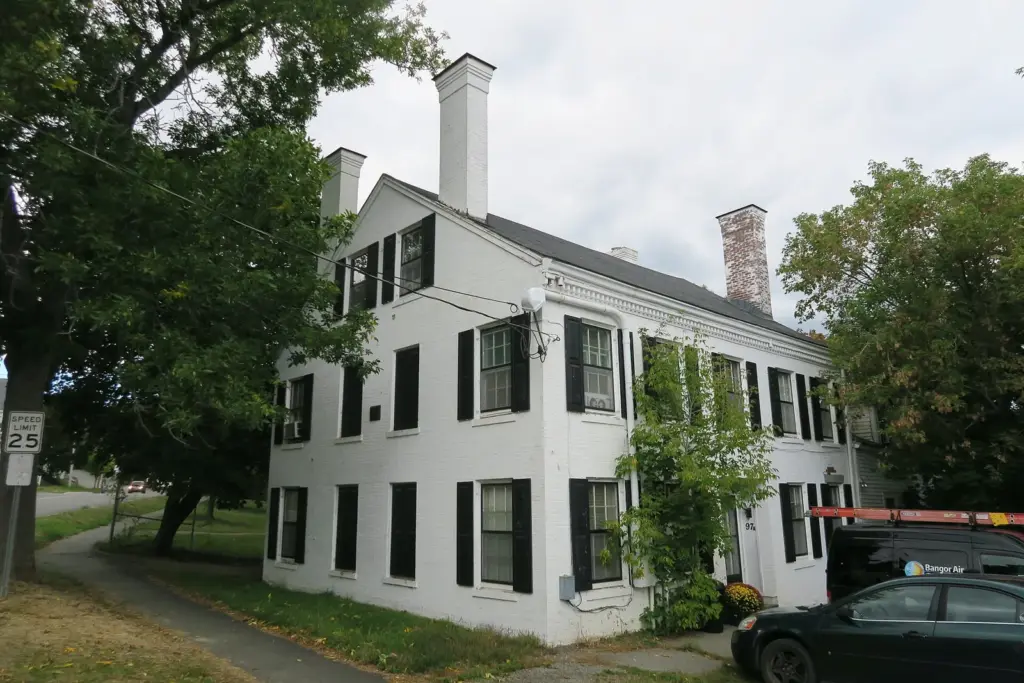

What does “condex” mean in Maine?
You will hear “condex” in Maine real estate listings, at closings, and from lenders, usually to describe an older two-family house or a newer duplex that has been converted into two condominium units. Each owner gets a separate deed and separate property tax bill for their unit, and can sell or mortgage it without the other owner. That is the appeal: the cost and feel of a duplex, with ownership closer to a single-family home.
The term itself has no legal definition. The Maine Condominium Act, found at Title 33, chapter 31 of the Maine Revised Statutes, does not distinguish a two-unit condominium from a two-hundred-unit one. A condex is created the same way as any Maine condominium, by recording a declaration (with plats and plans) at the county registry of deeds, and it has a unit owners’ association, even if the association is just two neighbors who never hold a formal meeting.
That last point is where insurance gets tricky. Many Maine condexes run informally for years. The owners split the cost of a new roof, one of them shovels the shared driveway, and nobody thinks about the association again until there is a fire, a burst pipe, or a sale. By then, the insurance has to match documents that may have been drafted decades ago.
Which Maine law applies to your condex?
Under §1601-102, the Maine Condominium Act applies to condominiums created in Maine after the Maine Condominium Act took effect, and to older condominiums that amended their documents to opt in. Condominiums created earlier are generally governed by their own documents and the older Unit Ownership Act, although several sections of the newer Act, including the resale rules, apply to them as well. If your condex was converted before the Act took effect, ask an attorney or your association which law your documents follow before assuming the rules below apply in full.
What Maine law says about condo association insurance
For condominiums under the Act, 33 M.R.S. §1603-113 is the core insurance rule. Starting no later than the first sale of a unit by the developer, the association must maintain, to the extent reasonably available:
- Property insurance on the common elements, against the risks commonly insured against. After deductibles, the total amount must be at least 80% of the actual cash value of the insured property, not counting land, foundations, and other items property policies normally exclude.
- Liability insurance, including medical payments, covering injuries and damage arising from the common elements, in an amount set by the executive board but not less than any amount the declaration requires.
The same section requires the association’s policy to treat each unit owner as an insured for liability tied to the common elements, to waive the insurer’s right to sue unit owners after paying a claim, and to keep one owner’s act or omission from voiding coverage for everyone. If the association’s policy and a unit owner’s policy cover the same risk, the association’s policy pays first. Claims are adjusted with the association, and the money goes to the association (or an insurance trustee) to repair the property, not to a unit owner’s mortgage lender.
Side-by-side vs. stacked: why Maine condexes split two ways
Here is the detail that matters most for two-unit buildings. Section 1603-113(b) says the association’s property insurance may include the units, and must include them in buildings where units have horizontal boundaries between them. In plain terms:
- Up-and-down condex (one unit on the first floor, one above): the association’s property policy must cover the units, because neither owner can insure a floor that sits on the other owner’s ceiling.
- Side-by-side condex (two halves split by a shared wall, each with its own entry, like the double house pictured above): the statute does not require the association to insure the units. Some declarations have the association insure the whole building anyway. Others make each owner insure their own side, with the association covering only what is truly common.
Neither setup is wrong. They simply need different policies. The mistake is assuming you know which one you have without reading the declaration.
Where your unit ends and the common elements begin
Unless the declaration says otherwise, §1602-102 draws the line at the finished surfaces. If walls, floors, or ceilings are named as the unit’s boundaries, then the paint, wallpaper, drywall, paneling, tile, and finished flooring belong to the unit, and the rest of the wall, floor, or ceiling is common element. Fixtures inside the boundaries belong to the unit. Things outside the boundaries that serve only one unit, such as that unit’s porch, steps, exterior doors, and windows, are limited common elements assigned to it. Pipes, wires, or ducts that serve only one unit are limited common elements too, while anything serving both is common.
Two-unit declarations often rewrite these defaults. Some make each owner responsible for their own roof section, windows, or heating system. Your insurance should follow those definitions, not the general rule.
Who insures what in a Maine condex?
Here is a typical split. Your declaration controls, so treat this as a starting checklist, not a final answer.
| Item | Usually insured by | What to check |
|---|---|---|
| Roof, exterior walls, foundation, structure | Association master policy (always for stacked units; often for side-by-side) | Whether the declaration assigns each owner their own half instead |
| Shared driveway, yard, septic, well, shared walls | Association | Liability limits and whether the septic or well is a common element |
| Interior finishes, cabinets, flooring, fixtures | Unit owner (HO-6), unless the master policy is written to include them | Whether the master policy covers units as originally built or excludes improvements |
| Owner upgrades and betterments | Unit owner | The statute lets the association exclude them |
| Furniture, clothing, belongings | Unit owner | Replacement cost vs. actual cash value on your policy |
| Personal liability inside your unit | Unit owner | Limits, and whether you want an umbrella |
| Master policy deductible and special assessments | Unit owners, as the bylaws direct | Loss assessment coverage on your HO-6 |
| Flood | Separate flood policy | Flood zone and whether the association buys building flood coverage |
Master policy vs. HO-6: how the two layers fit
When an association insures the building, the policy is often a commercial habitational policy, sometimes called a condominium association or master policy, written in the association’s name. The individual owner then buys an HO-6, the homeowners form designed for condominium units. The two are meant to interlock: the master policy covers the structure and common elements, and the HO-6 picks up the unit owner’s interior, belongings, liability, and share of association costs.
Portsmouth Atlantic can write both layers for a Maine condex. For the association’s building coverage, we place commercial habitational policies with Vermont Mutual, Concord Group, Safety, and Andover. For unit owners, nearly every carrier we represent in Maine writes HO-6 policies, including Chubb, Hanover, Cincinnati, Vermont Mutual, Concord Group, Andover, Safety, National General, and Foremost. Having one agent look at both policies is often the simplest way to find a gap before a claim does.
What if each owner insures their own half?
Some side-by-side condexes are set up, or simply operated, so that each owner carries a policy on their own half and nobody carries an association policy. That arrangement deserves a close look. A standard homeowners policy assumes you own the house and the land under it. In a condominium, you own a unit and an undivided share of the common elements, and the association has its own insurance duties under the Act. If the declaration requires the association to insure the common elements and it has no policy, a shared-wall fire or a slip on the common driveway can leave real questions about who is covered.
If your documents truly put the building on each owner, your agent should write a policy that fits that duty and the carrier should know the property is a condominium unit. If they put it on the association, the association needs its own policy, even with only two members. Either way, the policies should match the paperwork.
Actual cash value vs. replacement cost on the master policy
The Act sets a floor of 80% of actual cash value for the association’s property insurance. That is a minimum, not a recommendation, and many master policies are written on a replacement cost basis instead. Ask how your master policy values the building and whether the limit reflects what it would cost to rebuild today. If the association is underinsured, the shortfall can come back to the two owners as a special assessment.
What should your Maine HO-6 include?
Dwelling coverage for your interior and improvements
Sometimes called Coverage A on an HO-6, this pays to repair the parts of the unit you are responsible for: finished walls, floors, cabinets, built-ins, and the upgrades you or a prior owner added. If your master policy covers the unit only as originally built, a renovated kitchen or new flooring is on you. In a side-by-side condex where the declaration assigns your half of the building to you, this limit may need to cover far more than finishes.
Loss assessment
With only two owners, every association cost is split two ways. If a pine limb comes through the roof and the master policy has a large deductible, or if a claim is denied or comes in short, the association assesses the owners. Loss assessment coverage on your HO-6 can help pay your share of a covered assessment. Compare its limit to the master deductible, including any separate wind or named-storm deductible.
Belongings, loss of use, and liability
Personal property coverage protects what you own inside the unit, and loss of use helps with living costs if a covered loss makes the unit unlivable. Personal liability covers injuries and damage you cause, including water that leaks from your unit into your neighbor’s. Owners who rent out their unit, or who have higher-value belongings, often add scheduled items or an umbrella policy.
Water backup and frozen pipes
Sewer and drain backup is excluded from many base policies and is usually added by endorsement. Frozen pipes are often covered only if you took reasonable steps to keep heat on or drain the system. In a condex, a pipe that freezes in your half can soak your neighbor’s, so both owners have a stake in how the other heats and maintains their unit.
Maine risks that shape condex coverage
- Winter and ice dams. Heavy snow loads and ice dams are a regular source of roof and interior water claims in Maine. Know which policy responds to the roof and which responds to the ceiling below it.
- Oil heat and fuel tanks. Many older Maine two-unit buildings heat with oil. Ask whether each unit has its own tank and system, who owns them under the declaration, and how your carrier treats oil tanks, which some insurers ask about by age and location.
- Seasonal and rental use. Two-unit cottages and condexes near the coast and lakes are often second homes or rentals. Carriers ask about vacancy, occupancy, and rentals, and a unit that sits empty in winter needs a plan for heat and water.
- Coastal and river flooding. Coastal storms and spring runoff can flood low-lying properties. Flood is not covered by a master policy or HO-6.
- Older buildings. Many Maine condexes are converted homes from the 1800s or early 1900s. Older wiring, chimneys, and plumbing can affect eligibility and coverage, and rebuilding older construction can cost more than buyers expect.
Flood is a separate policy
Standard master policies, homeowners policies, and HO-6 policies exclude flood. Condominium owners can buy contents and building coverage through the National Flood Insurance Program in participating communities, and associations can insure the building. You can look up a property’s flood zone on the FEMA Flood Map Service Center. Being outside a high-risk zone does not mean a property cannot flood. Portsmouth Atlantic places NFIP flood policies in Maine through Selective, a Write Your Own (WYO) carrier for the National Flood Insurance Program.
Buying a Maine condex? An insurance checklist before closing
Under §1604-108, a seller must give a buyer copies of the declaration, bylaws, and rules, along with a resale certificate from the association. Among other things, the certificate must include a statement of any insurance coverage provided for the benefit of unit owners. Use that package, and ask for more:
- Read the declaration’s definition of the unit and its insurance section, and note whether the building is side-by-side or stacked.
- Get the master policy declarations page: insured name, property limit, valuation, deductibles, and liability limit.
- Confirm the association’s policy is in force. In two-unit buildings, it sometimes lapses quietly.
- Ask how the master deductible is allocated after a loss.
- Check the flood zone and whether the association carries flood on the building.
- Ask about the heating system, oil tank, roof age, and any recent claims.
- Have your agent line up an HO-6 that fits the documents before your lender asks for proof of insurance.
If you cannot find the recorded documents, search the registry of deeds for the county where the property sits. A real estate attorney can help if the documents are missing, unclear, or never fully set up.
Missing documents or an informal association?
It is common for a two-unit Maine condo to have a recorded declaration but no active association: no bank account, no budget, no meetings, and no master policy. That works until something goes wrong. If that describes your building, the practical steps are usually to find the recorded documents, confirm what they require, and then put the required insurance in place, with each owner’s HO-6 written to match. Questions about how to formally organize or amend an association belong with a Maine real estate attorney. We can help with the insurance side once you know what the documents say.

“Before you buy a Maine condex, ask whether the units are side by side or stacked. Then read the declaration to see who’s supposed to insure the building. If it isn’t clear, we’ll line up the master policy and your HO-6 so nothing falls through the gap.”
How Portsmouth Atlantic helps Maine condex owners
Portsmouth Atlantic Insurance is an independent agency licensed in 10 states, including Maine, with offices in Portsmouth, New Hampshire, and Stratford, Connecticut. We work with more than 30 carriers. In Maine, that includes Chubb, Hanover, Cincinnati, Vermont Mutual, Concord Group, Andover, Openly, Safety, National General, Progressive, Hagerty, and Foremost. We do not charge agency or broker fees on personal lines policies. If you also own a house, camp or cottage in Maine, see our page on second home insurance in Maine.
For a condex, that means we can review your declaration and master policy, recommend an HO-6 or other policy that matches your ownership, and, if the association needs building coverage, quote a commercial habitational policy. If you want your auto with the same company, note that Chubb and Cincinnati auto policies are written alongside their home policies. Owners in southern Maine can also see our York, Maine and Kittery, Maine pages.
Call us at (603) 431-4020 or request a quote online. Have your declaration, bylaws, and the master policy declarations page handy if you can.
Frequently asked questions
Is “condex” a real term in Maine?
Yes, informally. Maine buyers, sellers, and lenders use “condex” for a two-unit building, usually a converted duplex, that has been set up as a condominium. The term does not appear in the Maine Condominium Act. Legally, a Maine condex is simply a condominium with two units, and its declaration and bylaws control who insures what.
Does Maine law require a condex association to carry a master policy?
For condominiums governed by the Maine Condominium Act (33 M.R.S. chapter 31), section 1603-113 requires the association, to the extent reasonably available, to maintain property insurance on the common elements and liability insurance. The property insurance must include the units themselves only when units are stacked with horizontal boundaries between them. Older condominiums created before the Act may follow their own documents and the earlier Unit Ownership Act.
Do I need an HO-6 or a homeowners policy for my half of a Maine condex?
It depends on what the declaration says you own and must insure. If the association insures the whole building, you usually need an HO-6 for interior finishes, improvements, belongings, liability, and loss assessment. If the declaration makes each owner responsible for insuring their own side, the policy has to be built around that duty, and the association still needs coverage for the common elements and liability.
Who pays the master policy deductible after a loss in a Maine condex?
Check the declaration and bylaws. Many documents let the association pass the deductible to the owner whose unit was damaged or split it as a common expense. With only two owners, either way the money comes from the two of you. Loss assessment coverage on an HO-6 may help pay your share, subject to the policy terms and limits.
Does condex insurance cover flood in Maine?
No. Standard master, homeowners, and HO-6 policies exclude flood. Flood coverage is bought separately, through the National Flood Insurance Program or a private flood policy where available. That matters on the coast and along Maine’s rivers, where spring melt and heavy rain can cause flooding.
What insurance information should I get before buying a Maine condex?
Under 33 M.R.S. section 1604-108, a seller must give a buyer the declaration, bylaws, rules, and a resale certificate that includes a statement of insurance coverage provided for the benefit of unit owners. Ask for the master policy declarations page too, and have your agent review it before closing so your own policy fills the gaps.
Related guides
- Condex Insurance in New Hampshire
- Condominium Insurance in New Hampshire
- Condo Insurance vs Homeowners Insurance
- What Is an HOA Insurance Policy?
Sources
- 33 M.R.S. §1601-102, Applicability
- 33 M.R.S. §1602-102, Unit boundaries
- 33 M.R.S. §1603-113, Insurance
- 33 M.R.S. §1604-108, Resales of units
- FloodSmart: What flood insurance covers
- FEMA Flood Map Service Center
This page is general information, not legal advice. Your condominium documents and policy language control. Coverage is subject to policy terms, conditions, and underwriting.